
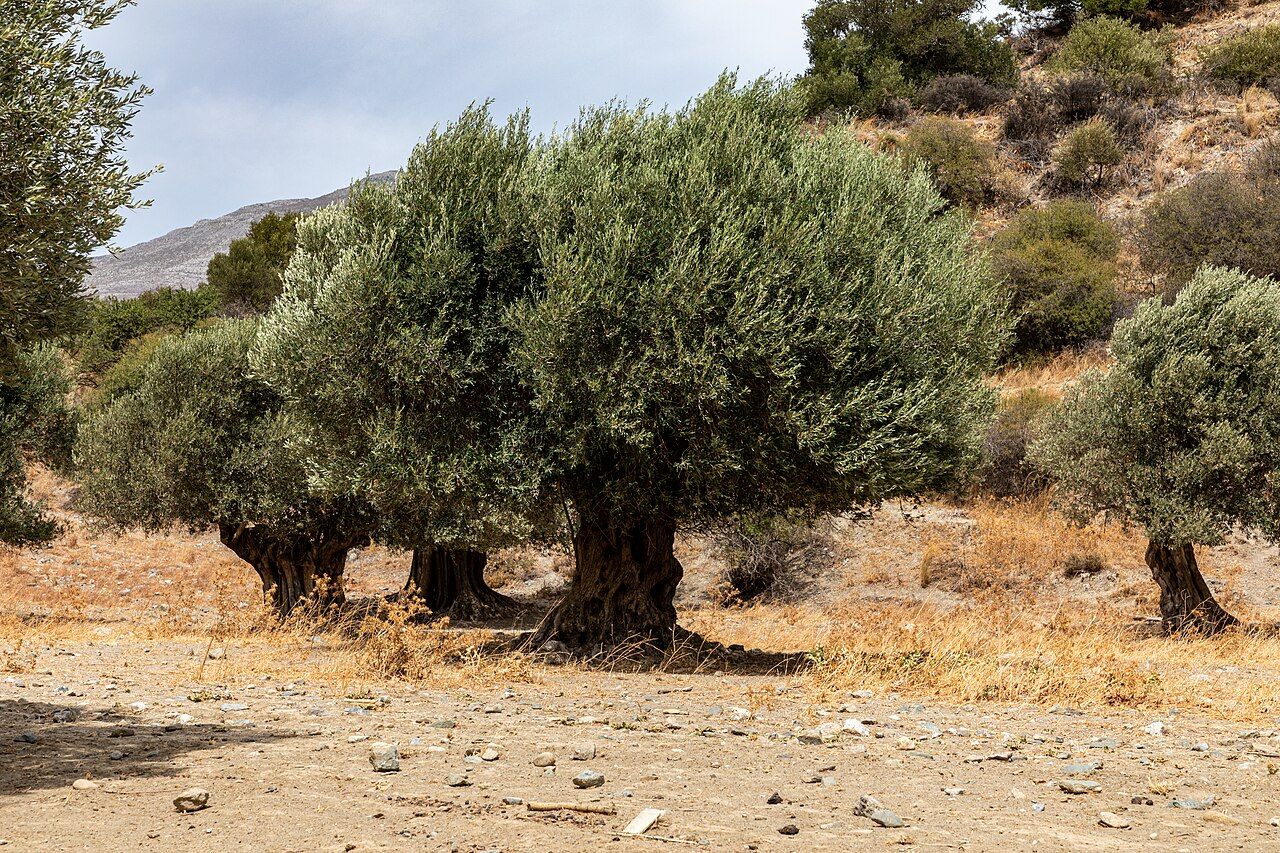
Look inland from almost anywhere on the Mirabello Bay and the hills are dotted with grey-green trees. Olives cover a huge share of Crete's farmland, from the terraces above Elounda to the plains of the west, and many families still own a few trees, even if they live in town. Between the groves, on the dry slopes that are too steep or stony to farm, grows the scrub of thyme, sage, oregano and other aromatic plants that gives the island its smell on a summer afternoon.
This guide is about both: the trees that produce the island's oil, and the wild herbs that end up in its teas, its honey and its kitchens.
The groves
Olive trees have been grown on Crete since Minoan times, and storage jars and presses from the ancient world are on show at archaeological sites and in museums. The landscape you see now was largely shaped over the last few centuries, as olives spread across the hills on stone terraces and oil became one of the island's main exports.
Most of the trees are of the Koroneiki variety, which bears small olives with a high yield of oil. Groves are planted with trees well spaced and pruned to keep them low, so that the fruit can be reached. Under them the ground is often bare in summer, ploughed or cleared to keep down weeds and save water, while in spring it fills with wild flowers and grasses.
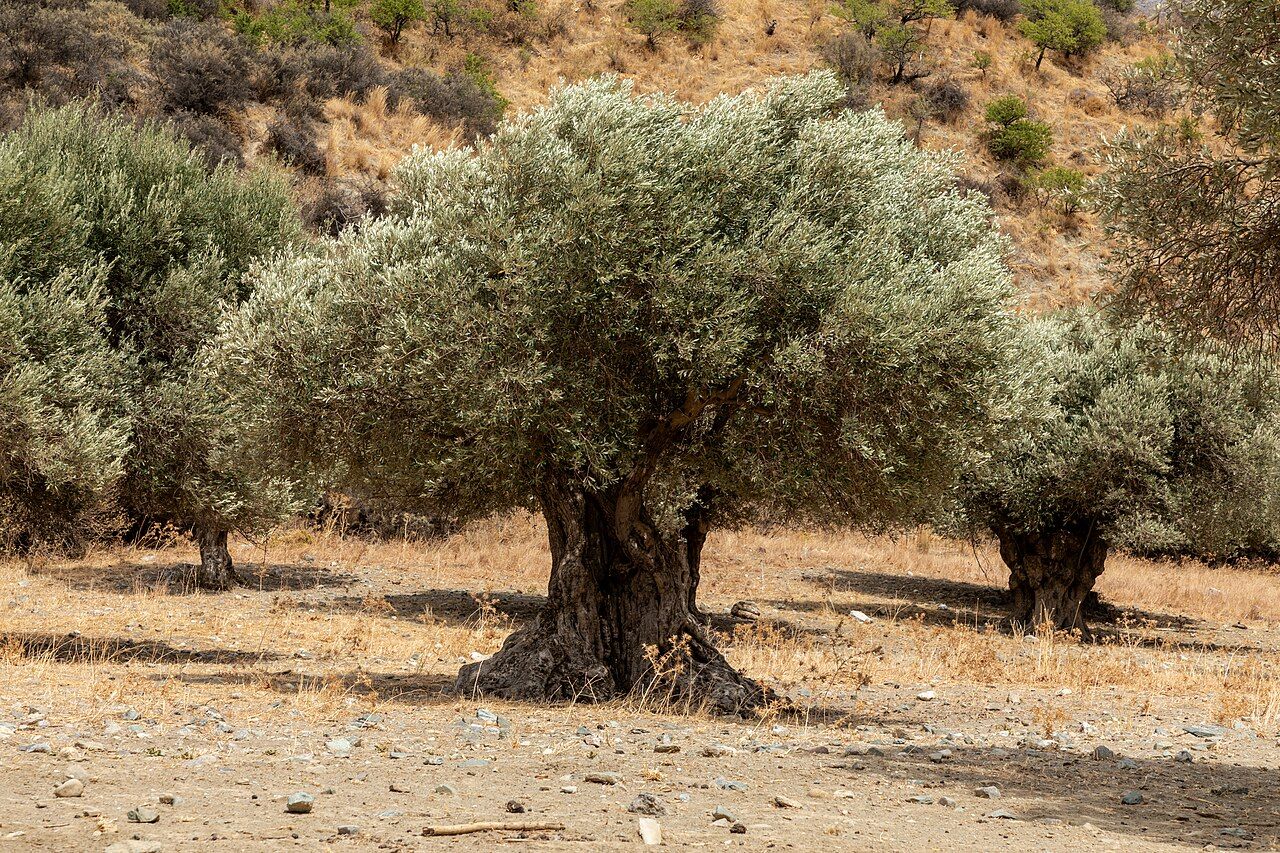

Walking through a grove, you notice how quiet it is. Cicadas fill the trees in summer, and the leaves, dark on top and silver below, flicker when the wind turns them. Groves offer patchy shade on a walk, but it moves with the sun, so on a hot day it is still worth starting early.
The harvest
The harvest runs through the cooler months, roughly from late autumn into the new year, with the exact timing depending on the area, the weather and how the owner likes the oil. Families and hired workers spread nets on the ground under the trees, then knock or comb the olives down with sticks, hand rakes or small machines with vibrating heads. The fruit is gathered from the nets into sacks and taken by truck to a cooperative or private mill.
At the mill the olives are washed and crushed, and the oil is separated from the water and pulp. Freshly pressed oil is cloudy and very green, with a peppery bite at the back of the throat. Many families bring their own olives and take home their own oil, enough to last the household for a year. If you are on the island in winter, you will see the nets in the groves, the trucks on the roads and smoke from burning prunings rising over the hills.
Ancient trees
Olive trees can live for a very long time, and Crete has some famous elders. Their trunks become huge and twisted, often hollow in the middle, while the outer wood keeps growing and fruiting. The best known stands near the village of Ano Vouves in the west of the island, a tree whose age is often put in the thousands of years and which still bears olives. Exact ages are hard to establish and estimates vary widely, but there is no doubt that some of these trees were already old when the Venetians arrived.
You do not need to travel west to see old trees. Many groves in the east have trunks wider than a person can reach around, and scattered through the countryside are lone giants left standing at the edge of a field or a chapel yard. Treat them with respect: do not climb them or cut souvenirs from their bark.
Herbs of the hillside
The low scrub that covers the dry slopes of Crete is called phrygana. It is made up of small, tough, aromatic shrubs that cope with long dry summers by holding oils in their leaves. Brush past them and the smell rises around you. Among the most common:
- Thyme, a low, cushion-shaped shrub with tiny leaves and pink or purple flowers in early summer.
- Sage, larger and greyer, with soft furry leaves; Cretans brew a tea of it called faskomilo.
- Oregano, dried in bunches and sprinkled on salads, tomatoes and grilled meat.
- Savory and marjoram, smaller relatives used in cooking.
- Rockrose, with pink or white papery flowers in spring and sticky leaves that once gave a resin used in medicines.
In spring the hillsides are at their most colourful, with flowering herbs, wild orchids, anemones and poppies. By July most plants have flowered and gone brown, but the smell is strongest then, released by the heat. The easiest place to meet them near Elounda is on the walk described in the guide to the Kolokytha peninsula.
Dittany and mountain tea
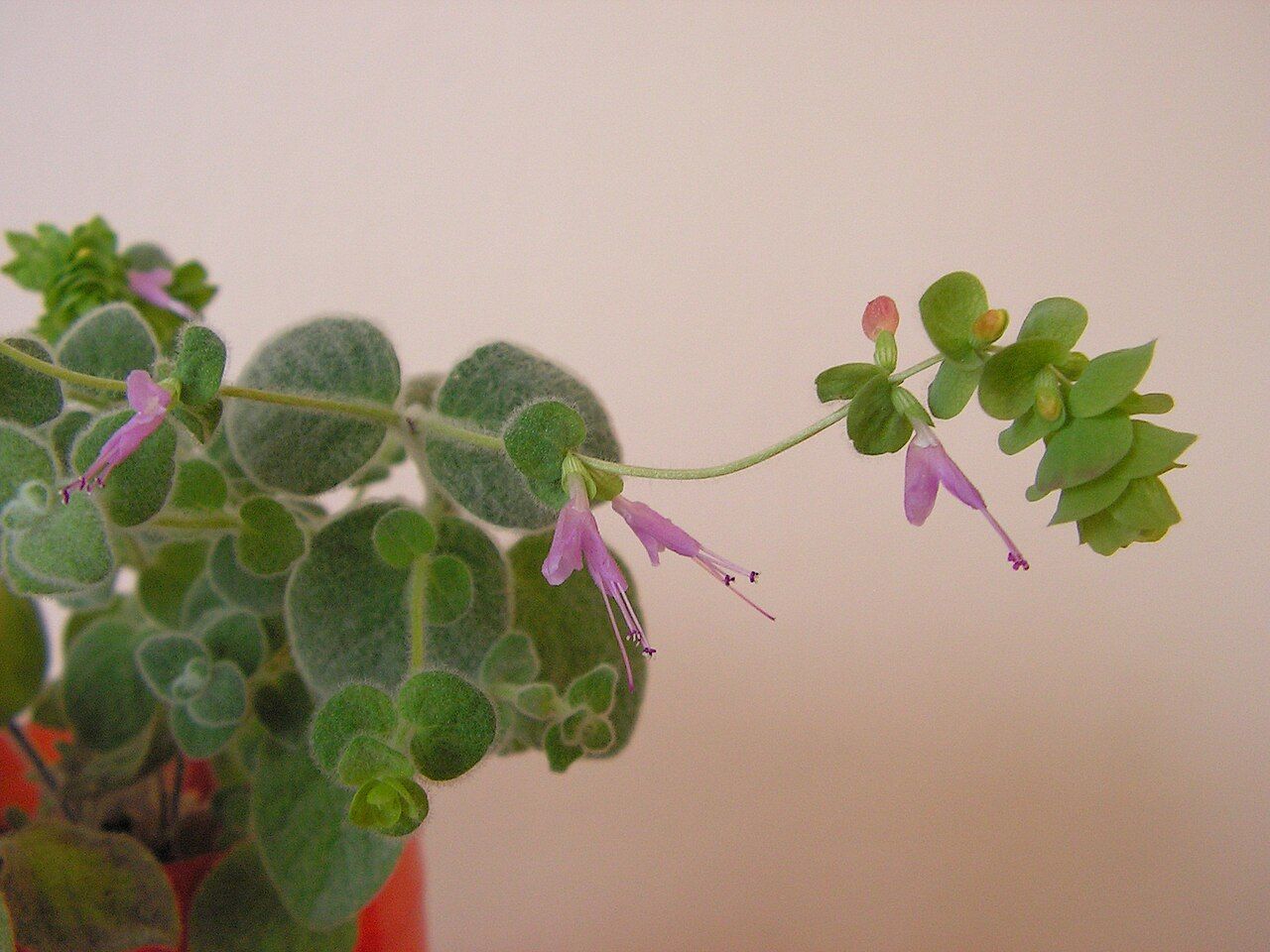
Two plants hold a special place. The first is dittany, or diktamo in Greek, a small plant with round, woolly grey-green leaves and pink flowers that grows wild on cliffs and in gorges and is found naturally only on Crete. It has been prized as a healing herb since antiquity, and old stories tell of wild goats wounded by arrows seeking it out to heal themselves. Gathering it once meant climbing dangerous rock faces. Today it is widely cultivated, which is where the dittany you buy should come from; the wild plant is protected and best left alone.

The second is malotira, often sold as Cretan mountain tea. It is a type of ironwort that grows on high ground in the mountains, with felted leaves and spikes of yellow flowers. Dried and brewed, it makes a mild, slightly sweet tea that is drunk in winter, often with honey, and is a household remedy for colds and upset stomachs.
Thyme honey and buying well
Where there is thyme there are bees. Beekeepers move their hives into the hills when the thyme flowers in early summer, and the honey they gather is the island's most famous. It is dark and strongly scented, and it crystallises slowly. Other honeys come from pine, heather, citrus blossom and mixed wild flowers, each with its own colour and flavour.
You will be offered oil, honey, dried herbs and teas in villages and at roadside stands across the east of the island. A few pointers help:
- Buy oil labelled extra virgin, in dark glass or tins, and check the harvest date if it is shown.
- Honey varies naturally between producers and years; small differences are normal.
- Choose cultivated dittany and other herbs rather than wild-gathered plants.
For the dishes that turn all of this into a meal, read the guide to what Crete puts on the table, and for a high, green inland landscape of orchards and fields, the guide to the Lasithi Plateau.
Lent to this page by
Photographs: ArtemiyPavlov / CC-BY-SA-3.0; Florian Waßmann / CC-BY-3.0; Mietek Ł / CC-BY-SA-3.0; Vadim Indeikin / CC-BY-SA-3.0


