
Elounda is not one place so much as a cluster of small settlements that grew together along a sheltered shore. The busy part, the one most people mean when they say the name, sits around the harbour at Schisma. Behind it the land rises fast into dry, stony hills dotted with olive and carob, and up there the older hamlets still look down on the water as they have for centuries. A first day spent simply walking between them tells you more about the place than any brochure could.
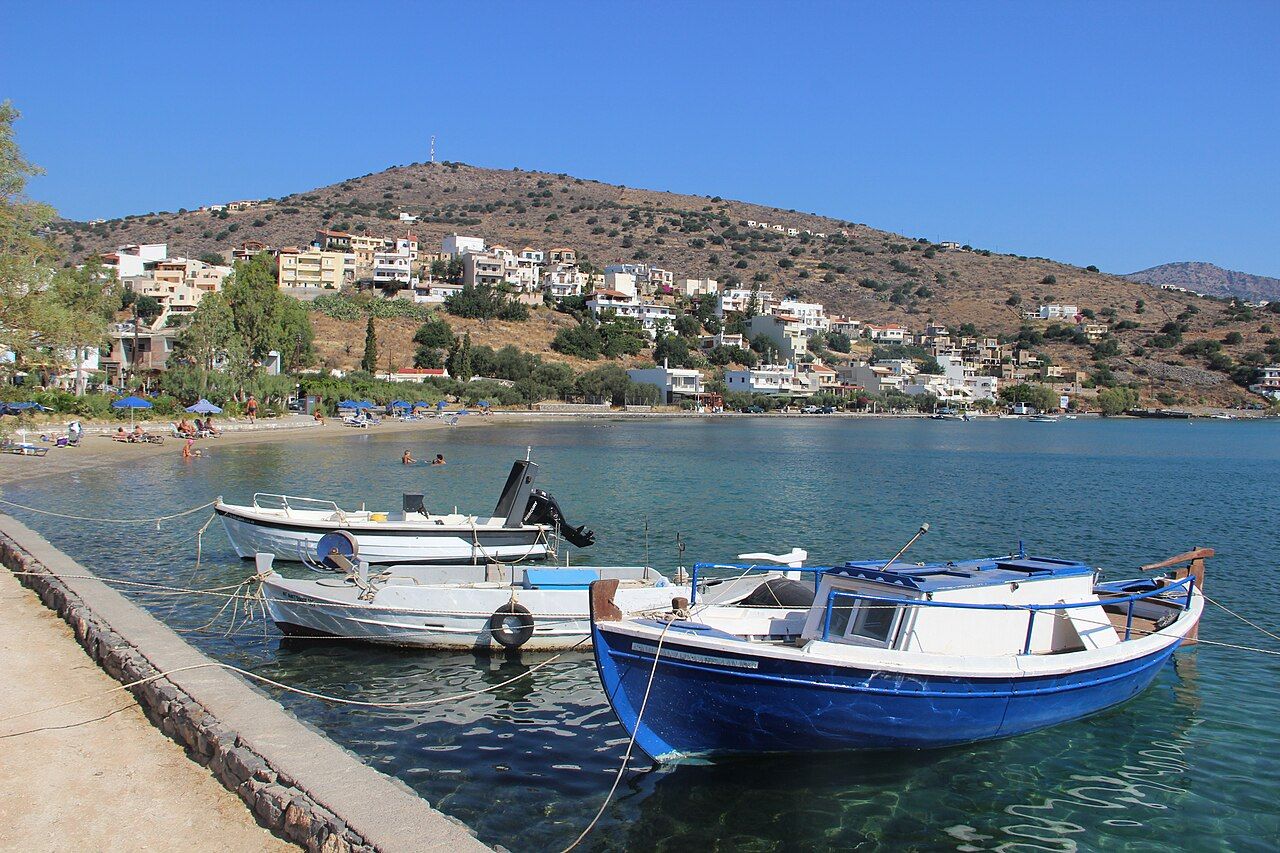
The harbour at Schisma
The harbour is the heart of the village and the best spot to begin. Small wooden fishing boats, many painted white and blue, tie up along the quay beside the larger craft that carry visitors out to Spinalonga. In the early morning the fishermen are often still sorting nets, and the water inside the breakwater lies flat and very clear. You can watch shoals of small fish turning over the pale stones on the bottom without leaving the quay.
Around the harbour sits the square, wide and paved, with a stone clock tower that makes an easy meeting point. A church with a red-tiled roof stands back from the water, and the cafes around the edge fill up from mid-morning. None of this is grand. It is a working harbour that learned to welcome visitors without losing the fishing boats, and that balance is the reason so many people come back.

Boats to the island leave from the harbour through the day in the warmer months. Times, prices and the number of departures change from year to year and with the weather. The trip itself has its own story in our guide to the island of Spinalonga.
Along the front, morning and evening
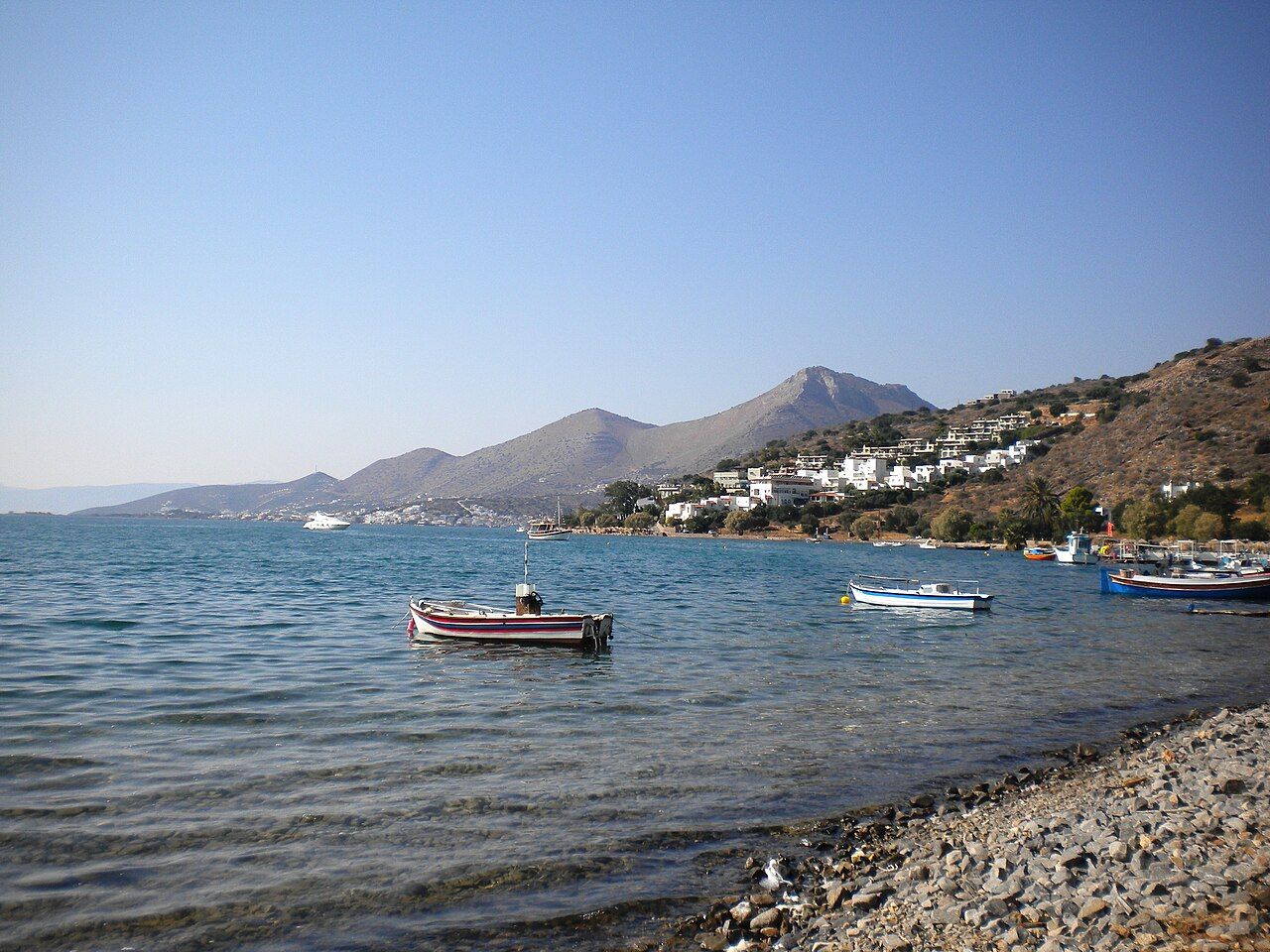
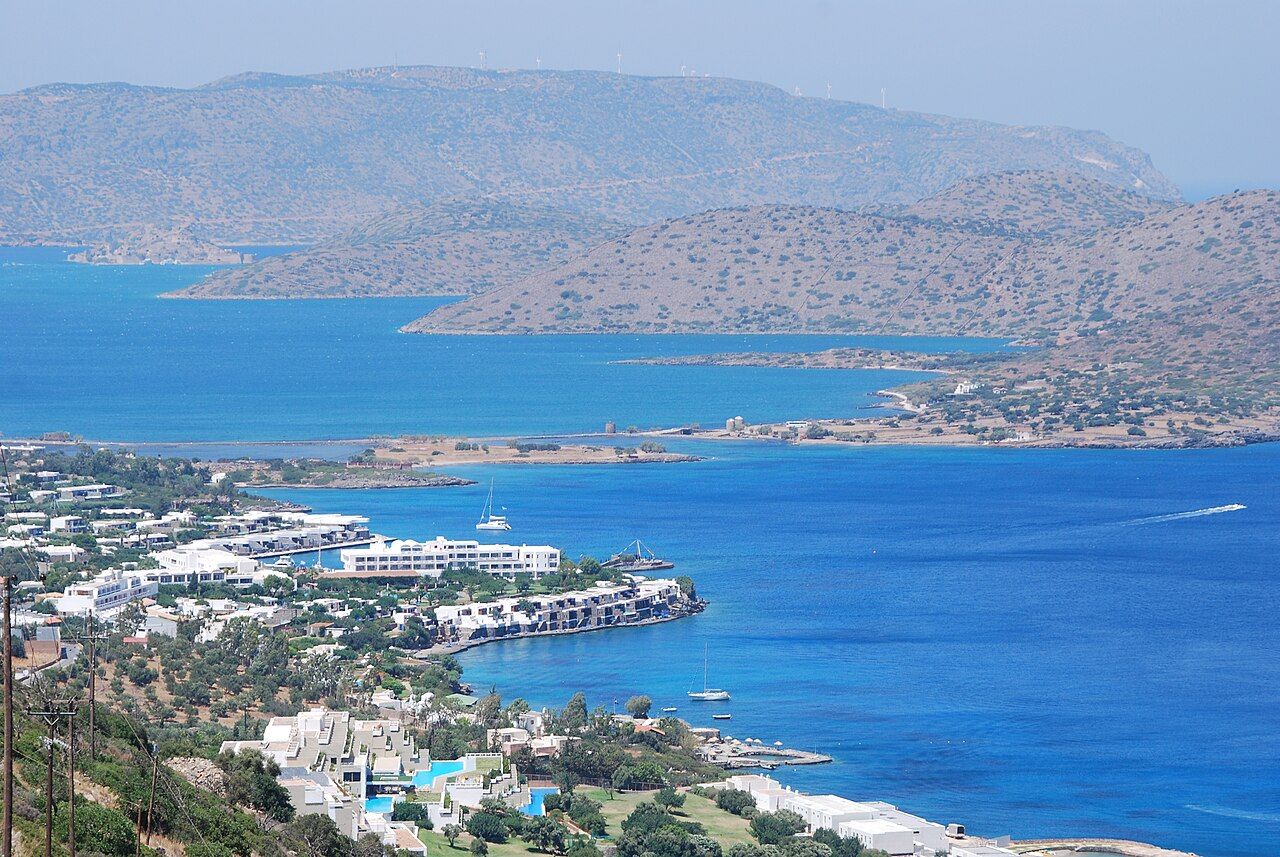
A shore path runs north and south from the harbour, sometimes as a proper promenade, sometimes as a narrow track between the road and the sea. Heading south you pass small coves and bathing ladders, then reach the low ground of Kato Elounda, where the salt pans and the causeway begin. That walk takes you straight into the world of the sunken city of Olous, whose stones lie in the shallows just off the causeway.
Going north from the harbour, the coast road and the shore lead past more coves towards Plaka, the village that faces Spinalonga across a narrow strait. Most visitors drive it or take a taxi, but part of the way can be walked if you start early and carry plenty of water.

The evening walk is the real habit here. Once the heat eases, people come out along the front, families with small children, couples in no hurry, older residents who have taken the same route for decades. The light turns gold on the peninsula across the water and the mountains towards Agios Nikolaos fade to blue. There is no particular place to reach. The point is the walk itself and the cool air off the sea.
The point is the walk itself and the cool air off the sea.
The hamlets on the hill
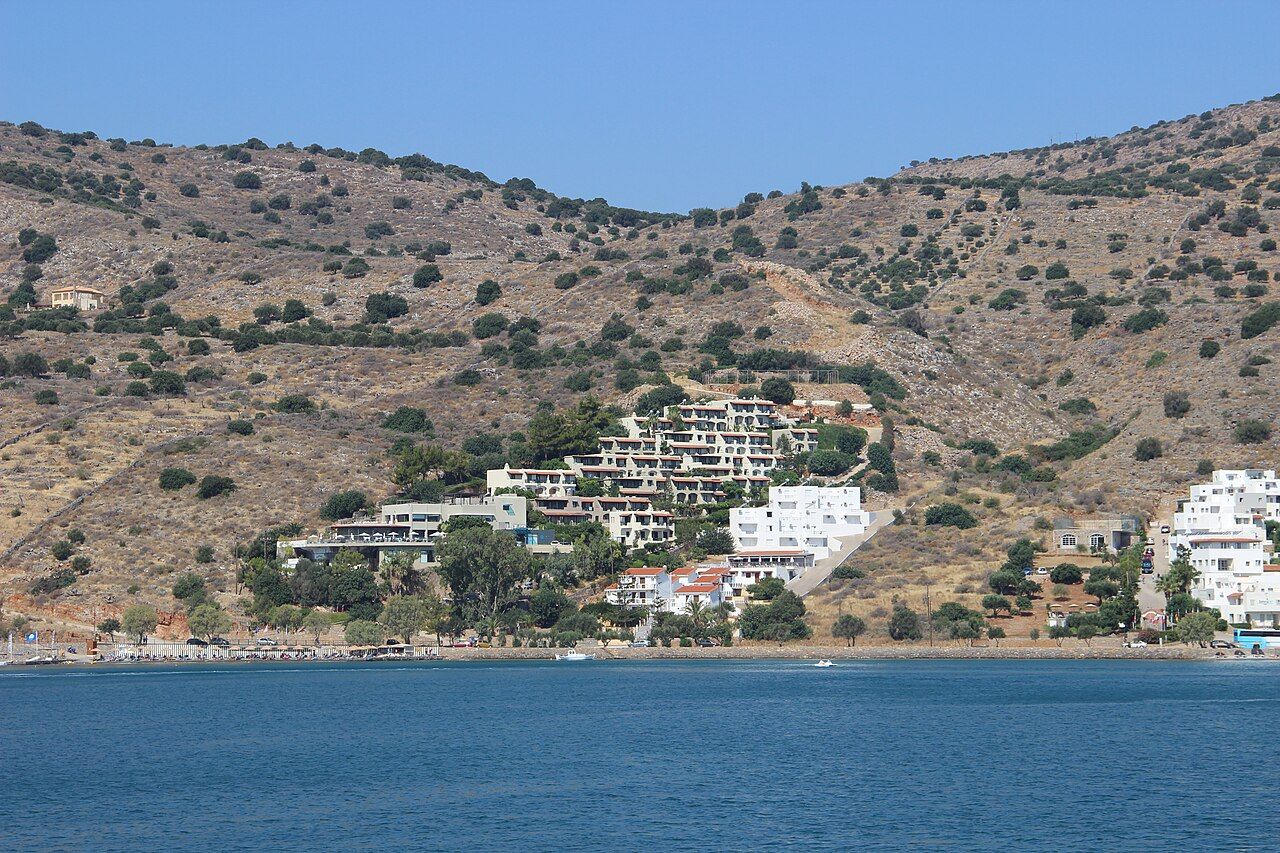
Elounda as an administrative name covers several old villages. Mavrikiano sits on the slope above the harbour to the north, its houses stacked on terraces with steep lanes between them. Pano Elounda, sometimes written Epano Elounda, lies higher still and further inland. These were the original settlements. For a long time people lived up on the hill, away from the shore and its dangers, and came down to the water to fish or to work the salt pans.
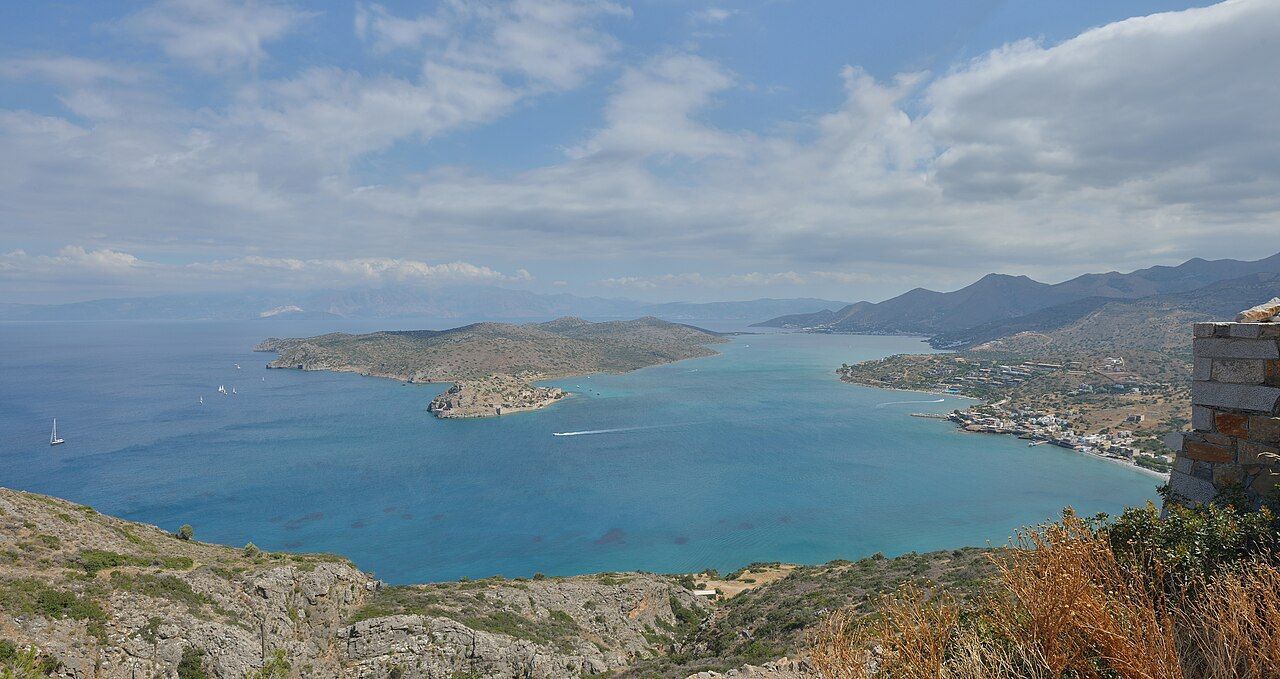
Climbing to them is a short walk in distance and a hard one in summer heat. The lanes are steep and in places stepped, with little shade until you reach the small squares and church courtyards. Early morning or the last hour before sunset are the times to try it. From the top you get the whole bay at once: the harbour below, the causeway and the windmills to the south, the long hump of the peninsula and the walls of the fortress on its islet.

The upper villages are quieter than the harbour. You will pass gardens with lemon trees and vines, old stone houses with wooden doors, and the occasional new home built in the same pale stone. Chapels appear in odd corners, often with a name day festival once a year when the whole hamlet turns out.

How a fishing village grew
For most of its history Elounda lived from the sea, from olives and from salt. The shallow pans at the southern end of the bay were worked from Venetian times, and salt was a valuable trade good. Fishing was the other constant, and much of the coast here was farmed in narrow terraces that you can still trace on the hills.
Tourism came slowly from the 1960s and then faster. A British television drama filmed here in the late 1970s brought the bay to a wide audience, and over the following decades the shore filled with places to stay, many of them low and spread out along the slopes. The village centre kept its scale, though. The harbour, the square and the hamlets above are recognisably the same places older photographs show, and the fishing boats still go out.
What changed most is the season. Elounda is lively from late spring to the middle of autumn, and much quieter in winter, when many businesses close and the village goes back to its own rhythm. Our guide to Elounda through the year goes into what is open when.
A slow first day
If you arrive tired from the journey, Elounda rewards doing very little. A sensible plan for a first full day looks something like this:
- An early swim from one of the small coves near the harbour, before the sun is high.
- Breakfast and a coffee on the square, watching the boats come and go.
- A morning stroll south along the shore towards the causeway, turning back before the midday heat.
- A long lunch and a rest through the hottest hours, indoors or in deep shade.
- A late-afternoon climb to Mavrikiano for the view, with water in your bag.
- The evening walk along the front as the light fades.
Midday in July and August is genuinely hot, often well into the thirties, and the reflected glare off pale stone and water makes it feel hotter. Keep the middle of the day for shade and wear a hat whenever you walk.
Swimming close to the village
The water in the inner bay is usually calm because the peninsula shelters it from the open sea. Shores near the village are a mix of fine pebbles and small stretches of sand, with rocky patches where sea urchins live, so water shoes help. The town beach just south of the harbour is the most convenient, and there are quieter coves along the shore in both directions. For a fuller picture, read about the beaches around Elounda.
Getting in and out
Elounda lies a short drive north of Agios Nikolaos along a winding coastal road with fine views. Local buses run between the two through the day, more often in summer, and taxis wait near the square. Timetables change by season.
Give the village a day of its own before you start racing round the island. The harbour, the hill and the evening walk set the pace for everything that follows.
Lent to this page by
Photographs: Tomisti / CC-BY-SA-4.0; Ggia / CC-BY-SA-3.0; Mietek Ł / CC-BY-SA-3.0; Tomisti / CC-BY-SA-4.0; Doris Antony, Berlin / CC-BY-SA-3.0


