
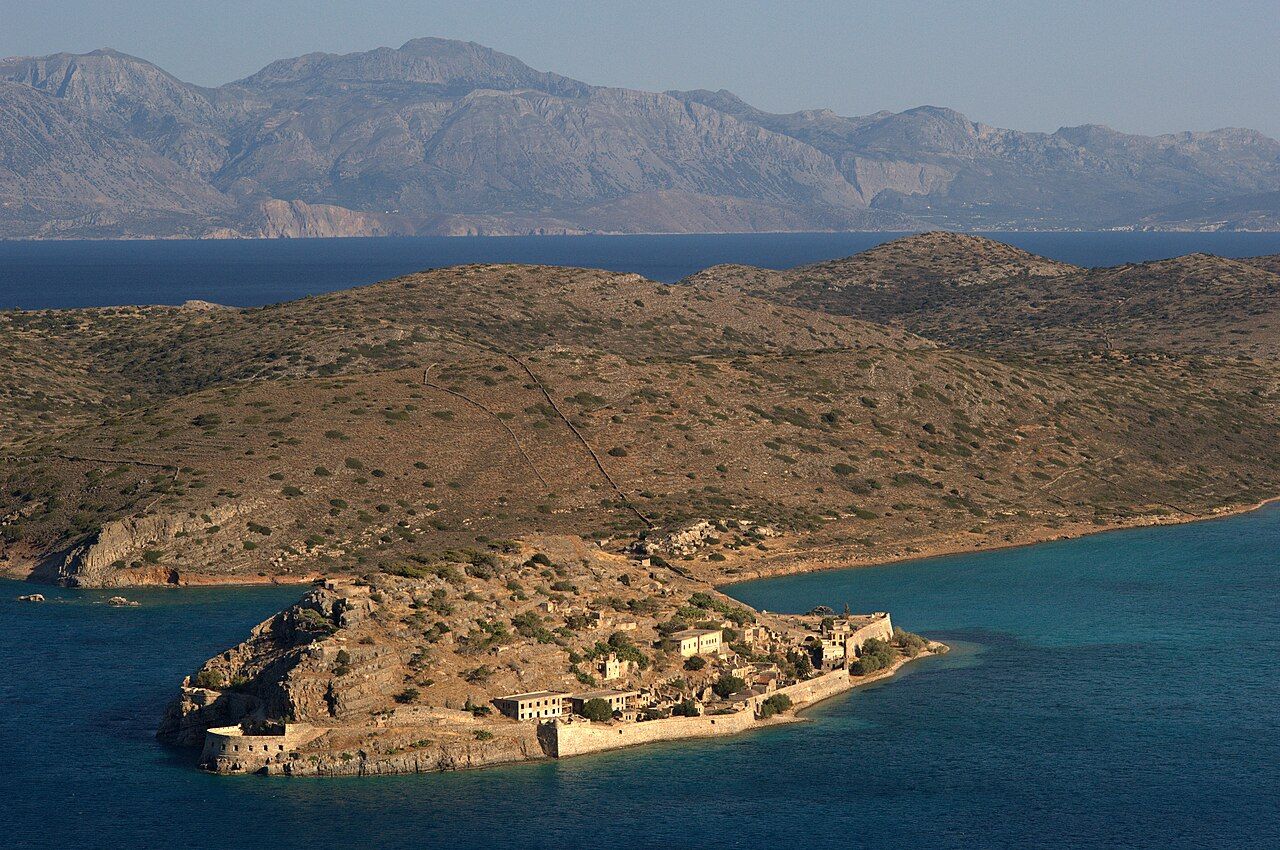
From the harbour at Elounda the islet looks small and almost toy-like, a low rock wrapped in walls at the point where the bay meets the open sea. Up close it is something else. Spinalonga holds three layers of history, one on top of another: a Venetian fortress, the Ottoman village that grew inside it, and the leper colony that occupied the same streets from 1903 to 1957. A visit takes a couple of hours, and most people leave quieter than they arrived.
The Venetian fortress
The Venetians, who ruled Crete for more than four centuries, began fortifying the islet in the 1570s. Their aim was to guard the entrance to the bay and the valuable salt pans at its southern end. They built a ring of walls following the shape of the rock, with round bastions at the corners and gun positions facing the channel. The engineering was good enough that Spinalonga stayed in Venetian hands long after the rest of Crete fell to the Ottomans in 1669. It was only handed over by treaty in the early eighteenth century.
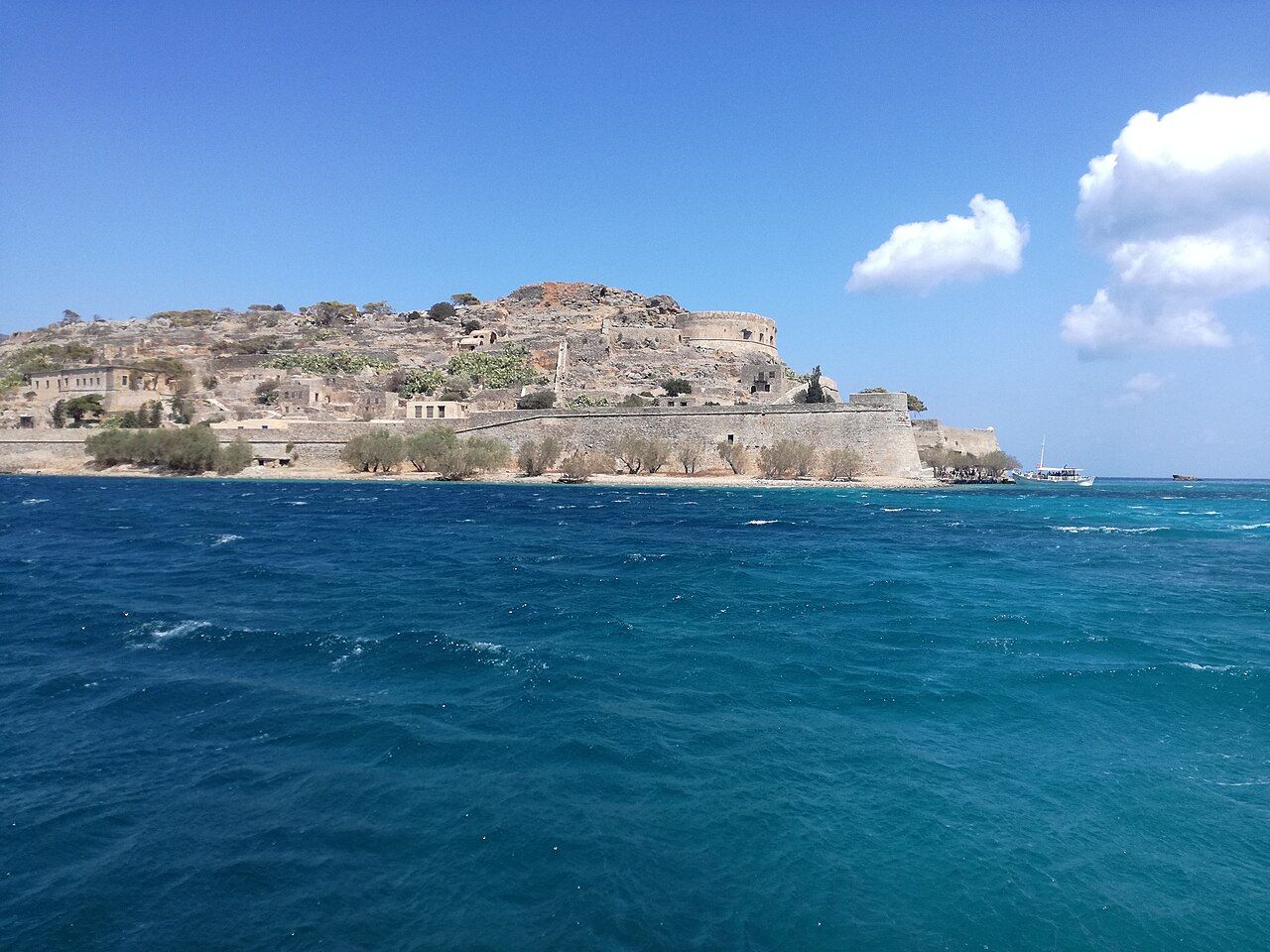

The walls are the first thing you see from the water and the last thing you lose sight of on the way back. Walking round the outer path, you pass the bastions one by one and can look down into the clear water on the seaward side, where the rock drops steeply.
The Ottoman village
Under Ottoman rule, Muslim families settled inside the walls and the fortress became a small trading village. Houses went up along the main street, with shops on the ground floor and living rooms above, and the islet did business with the coast. By the late nineteenth century it was a busy little place. After Crete gained autonomy at the end of that century, most of the Muslim inhabitants left, and the houses stood empty.
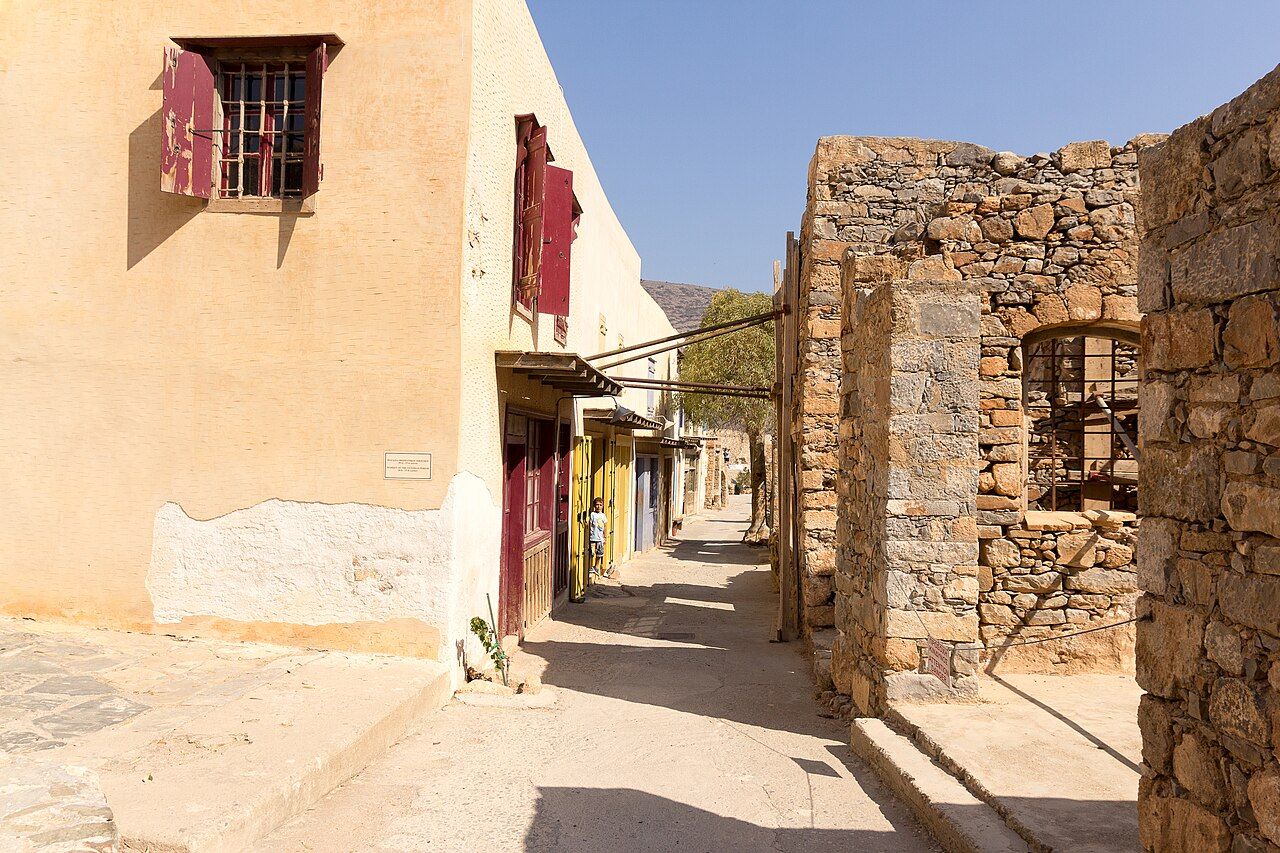
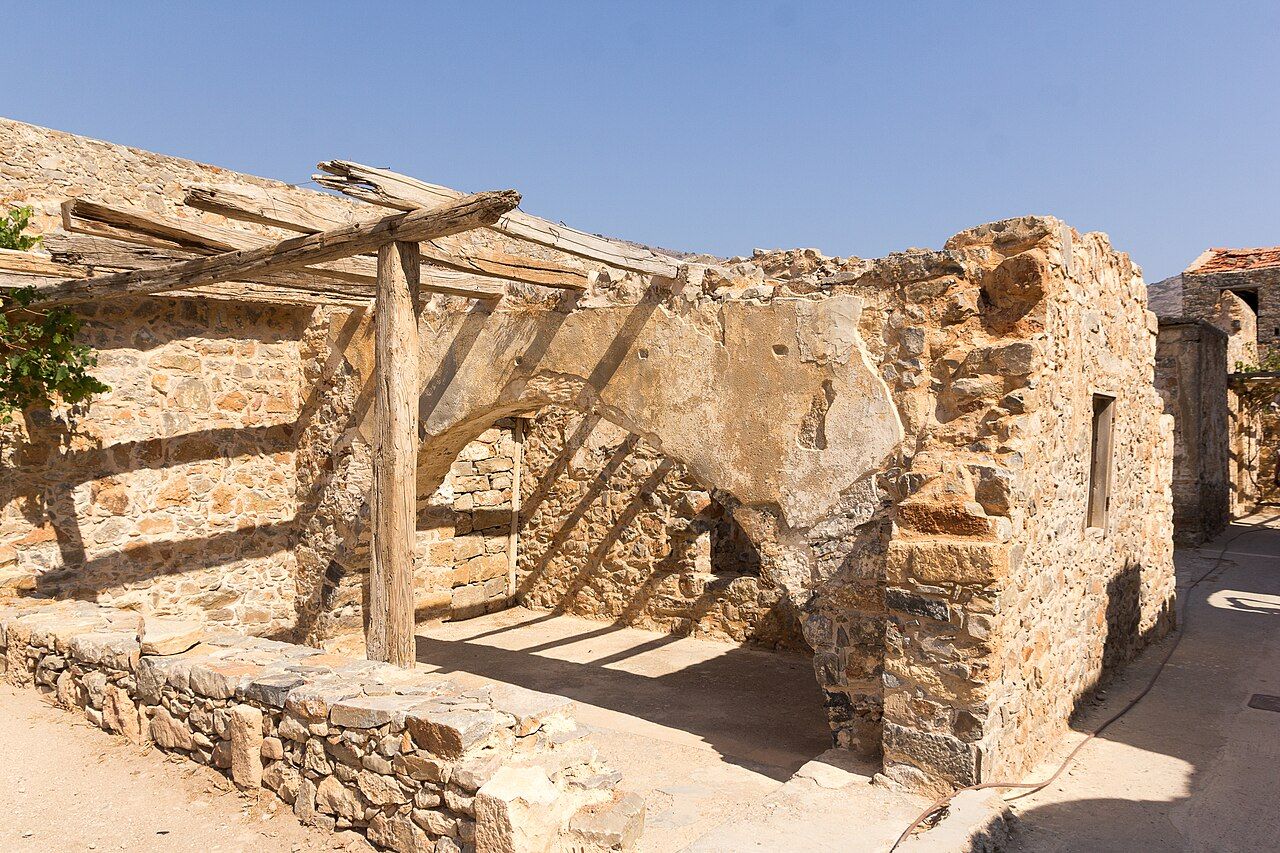
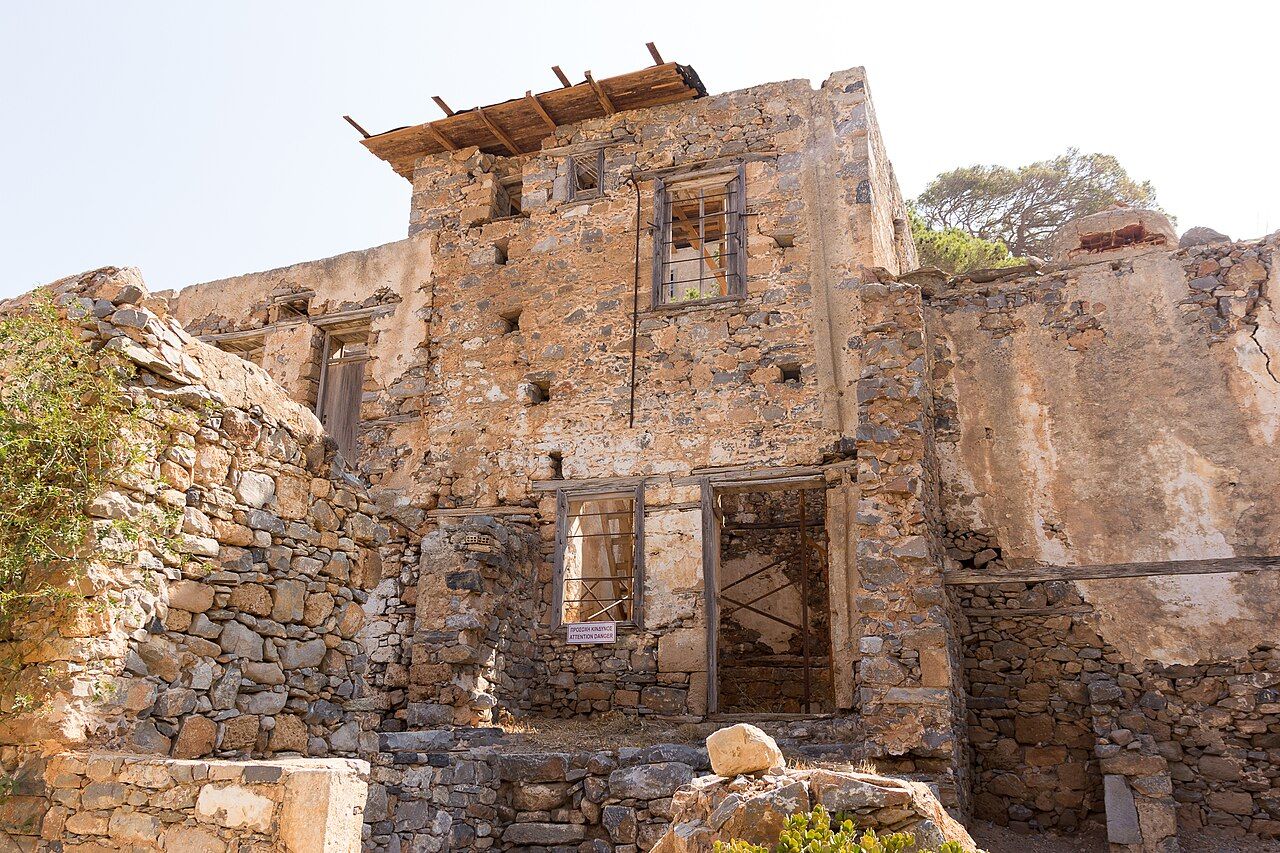
Many of the buildings you walk past date from this period, even though they are remembered for what came next. The arched doorways, the stone stairs and the wooden balconies on the main street all belong to the Ottoman village that preceded the colony.

The leper colony, 1903 to 1957
In 1903 the Cretan authorities chose Spinalonga as the place to isolate people with leprosy, now called Hansen's disease. Sufferers from across Crete, and later from the rest of Greece, were sent to the islet. Many arrived against their will, separated from families who often never saw them again. The fear of the disease at the time was enormous, and the stigma followed patients and their relatives for the rest of their lives.
Conditions in the early years were very poor. Over time, and partly through the efforts of the residents themselves, things changed. The islet gained a hospital, a water supply, electricity and a church. People married, ran small shops and kept gardens. Residents received a small allowance from the state, and boats brought supplies from the mainland. It was a community, but it was a community of exiles, and the walls that once kept enemies out now kept the sick in.
It was a community, but it was a community of exiles, and the walls that once kept enemies out now kept the sick in.
Effective drug treatment for leprosy arrived in the middle of the twentieth century, and the colony was closed in 1957. The remaining patients were moved to a hospital in Athens. For decades afterwards the islet stood empty and decaying, and only in recent times has it been carefully stabilised and partly restored as a monument.
It is worth remembering, as you walk, that the people who lived here are within living memory. A bestselling novel set on the islet brought huge numbers of new visitors, and with them a risk of treating the place as a backdrop. It is better treated as you would any memorial.
The tunnel and the walk round
Boats land near the old entrance on the western side. Patients arriving on the islet passed through a vaulted tunnel in the walls, and visitors today enter the same way. The passage is short and dark, and coming out of it into the bright street beyond is one of the more affecting moments of the visit, given who made that walk before you.
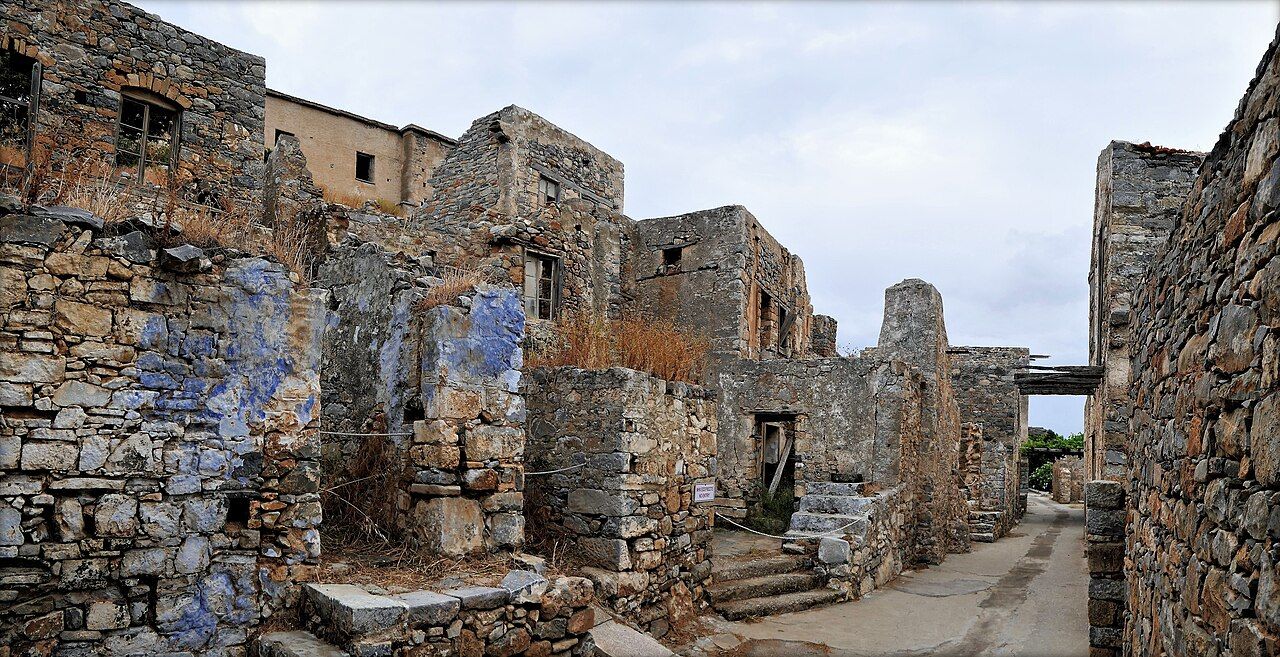

From the tunnel a path loops round the islet, first along the main street of houses and former shops, then past the church, the hospital buildings and the laundry, and up onto the higher ground behind. It returns along the outer walls to the landing stage. Allow at least an hour and a half at a steady pace, longer if you stop to read the panels. Information boards explain the different buildings in more than one language.

The cemetery lies near the southern tip. Patients were buried there, in simple graves that are still visible. It is a quiet spot, and a respectful pause there is the right response.

Boats, tickets and the heat
There are three common ways to reach the islet, all by boat. From Plaka the crossing takes only about ten minutes in a small boat. From Elounda harbour the trip is longer, perhaps twenty to thirty minutes. From Agios Nikolaos larger boats make a longer excursion, often combined with a swim stop elsewhere in the bay. Departures run frequently in summer and less often in spring and autumn. Prices, timetables and the season itself change from year to year.
The boat fare and the entry ticket to the site are paid separately. Opening hours vary through the year, and the site may close in strong wind or in winter. Read more about the crossing from the nearer shore in our piece on Plaka and the strait, and about all the ways round the region in getting around east Crete.
Timing for heat and crowds
- Go early. The first boats of the morning are cooler and the streets are emptier.
- Late afternoon is the other good window, when the light softens and the day boats have left.
- There is almost no shade on the higher path, so carry at least a litre of water each and wear a hat.
- The paths are uneven stone and gravel. Sandals with grip or light walking shoes are better than flip-flops.
- A strong north wind can make the crossing choppy and occasionally stops the boats.
Spring and autumn are the kindest seasons for a visit. In July and August the islet is busy from mid-morning and the stone throws back the heat. Whenever you come, give yourself time on the boat home to look back at the walls and think about the people who lived inside them.
Lent to this page by
Photographs: Tomisti / CC-BY-SA-4.0; Vadim Indeikin / CC-BY-SA-3.0; Mietek Ł / CC-BY-SA-3.0; Tomisti / CC-BY-SA-4.0; Doris Antony, Berlin / CC-BY-SA-3.0


