
Elounda sits at the end of a coast road in the north-east of Crete, a short drive from Agios Nikolaos and a longer one from the island's main airport. Getting there is straightforward, and once you arrive there are several ways to get about: local buses, taxis, hire cars and boats. Each suits a different kind of day. This guide covers the basics and the habits of the road, without timetables or prices, which change from season to season.
Arriving: Heraklion airport
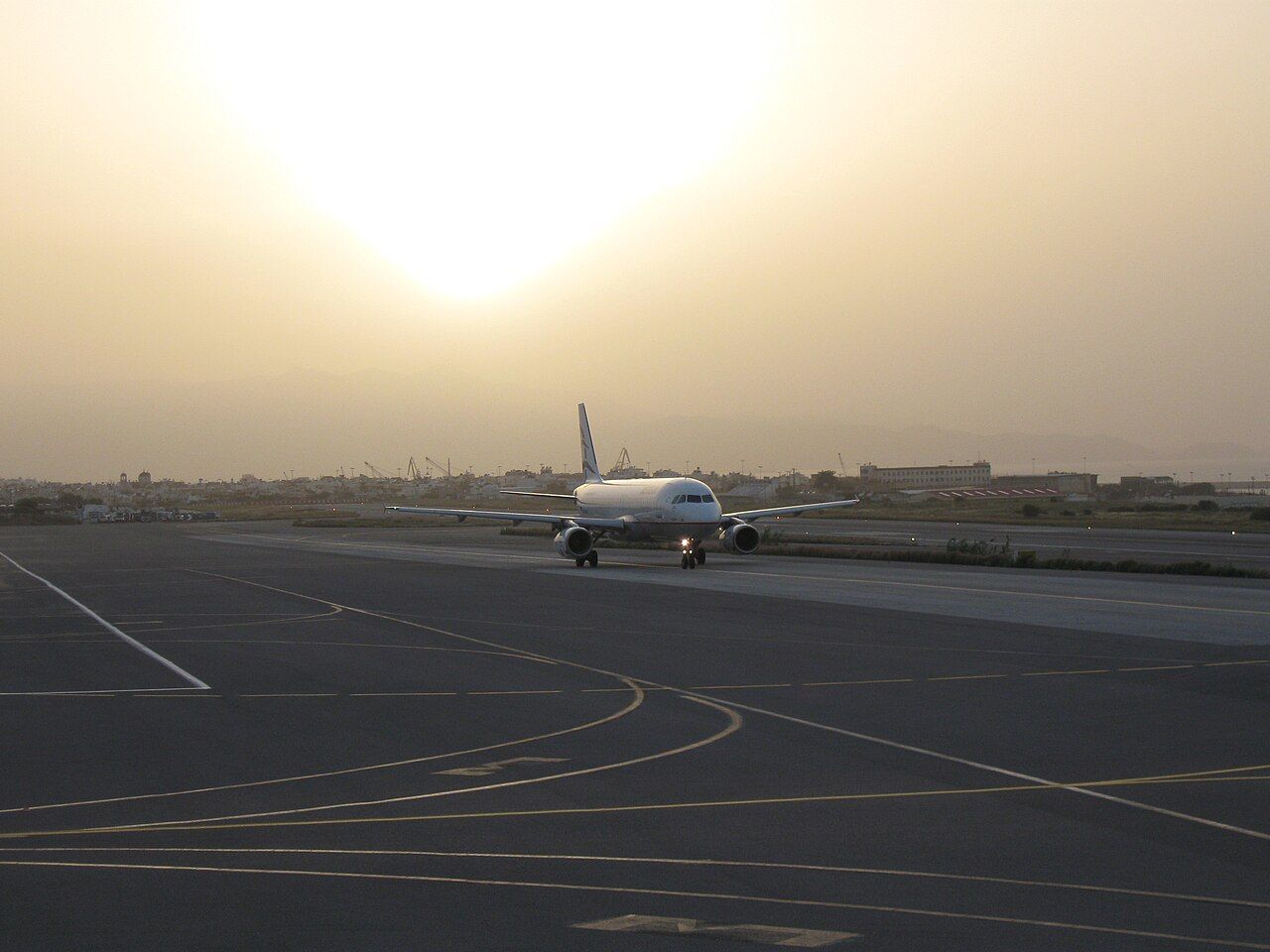
Most visitors fly into Heraklion's international airport, named after the writer Nikos Kazantzakis, on the coast just east of the city. It is busy in summer, with many flights arriving in waves, and queues at passport control, baggage reclaim and taxi ranks can be long at peak times. Patience helps.
A new airport has for some years been under construction at Kastelli, inland and south-east of Heraklion, to replace the current one. Opening dates have shifted more than once. A small airport near Sitia in the far east handles a limited number of flights.
From Heraklion airport to Elounda is roughly 70 kilometres. By road it usually takes a little over an hour, longer in heavy traffic. You can go by taxi or pre-arranged transfer, by hire car, or by bus with a change.
The national road
The main road along the north coast, often called the national road or VOAK, links Chania, Rethymno, Heraklion and Agios Nikolaos. East of Heraklion it runs past the resort towns of the coast, then turns inland through hills before reaching Agios Nikolaos. Sections have been rebuilt and widened over the years, and further upgrades are under way, so expect roadworks and changing layouts.
Driving it is generally easy, but traffic can be heavy, especially near Heraklion. A long-standing local habit is that slower vehicles move partly onto the hard shoulder to let faster cars overtake. You will see it constantly. Do it yourself when someone is close behind, but watch for parked cars, cyclists and pedestrians on the shoulder, and never overtake on a blind bend. From Agios Nikolaos a smaller coast road leads north to Elounda.
Buses
Long-distance buses across Crete are run by regional bus companies and are reasonably cheap and reliable. For Elounda, the key hub is Agios Nikolaos. Buses connect Heraklion's main bus station with Agios Nikolaos through the day, and from Agios Nikolaos local buses run to Elounda and Plaka. Other routes from Agios Nikolaos serve Kritsa, Ierapetra, Sitia and villages along the way.
- Timetables change between summer and winter, and Sunday services are often fewer.
- Tickets are usually bought at the bus station or on board; keep some cash and small change.
- Arrive early for popular routes in summer; buses can fill.
Buses are fine for town to town and for the main sights, but less useful for remote beaches, gorges or mountain villages, where services may be one or two a day or none at all.
Hire cars and Cretan roads
A car gives you freedom to reach places such as the Lasithi Plateau, the Richtis gorge or the beaches near Istro on your own schedule. Hire is easy to arrange in Elounda, Agios Nikolaos or at the airport. Rules on licences differ by country; some visitors need an international driving permit as well as their home licence.
Cretan roads vary a great deal. Main routes are generally good, but mountain roads are narrow, winding and often without barriers, with sharp bends, steep drops and the occasional rockfall. In villages, streets can be very tight. A few habits help:
- Drive slower than you think you need to on unfamiliar mountain roads.
- Sound the horn before blind bends on narrow roads.
- Expect goats, sheep, tractors and parked cars around corners.
- Fill up before heading inland; fuel stations are scarce in the mountains, and some close early or on Sundays.
- Do not drink and drive; limits are low and enforced.
Parking in Elounda and Agios Nikolaos can be tight in summer. Use marked spaces and car parks, and watch for signs, since rules and paid zones change.
Taxis
Taxis are easy to find in Elounda and Agios Nikolaos, with ranks in the centre and drivers who can be called by phone. They are useful for airport runs, evenings out and one-way walks such as gorges. Taxis have meters, but for longer trips many drivers quote a fixed fare; agree the price before you set off. Carry cash, as not every driver takes cards.
Boats to Spinalonga and around the bay
The island fortress of Spinalonga is reached only by boat. Regular small boats cross from Plaka in a few minutes, and longer trips leave from Elounda harbour and from Agios Nikolaos, some combining the island with a swim stop. Frequencies, seasons and fares vary, and services can be suspended in strong wind. The guide to Spinalonga has more on the island and its history.
Boats are also a pleasant way to see the coast. In summer, trips leave Agios Nikolaos and Elounda for beaches and coves around the Mirabello Bay. Take water, sun protection and something to cover up, since shade on deck can be limited.
Walking, cycling and the heat
Elounda is easy to walk around, and paths run along the shore towards the causeway and Plaka. Cycling is possible but hilly, and the roads are narrow with little room for bikes. In July and August, avoid walking long distances in the middle of the day. Carry water, wear a hat and plan routes with shade where you can.
For ideas on where all these roads lead, see the guides to the Lasithi Plateau and Heraklion's museum and walls.
Lent to this page by
Photographs: Marc Ryckaert ( MJJR ) / CC-BY-3.0; ArtemiyPavlov / CC-BY-SA-3.0; Mietek Ł / CC-BY-SA-3.0; Vadim Indeikin / CC-BY-SA-3.0; Ggia / CC-BY-SA-3.0


