
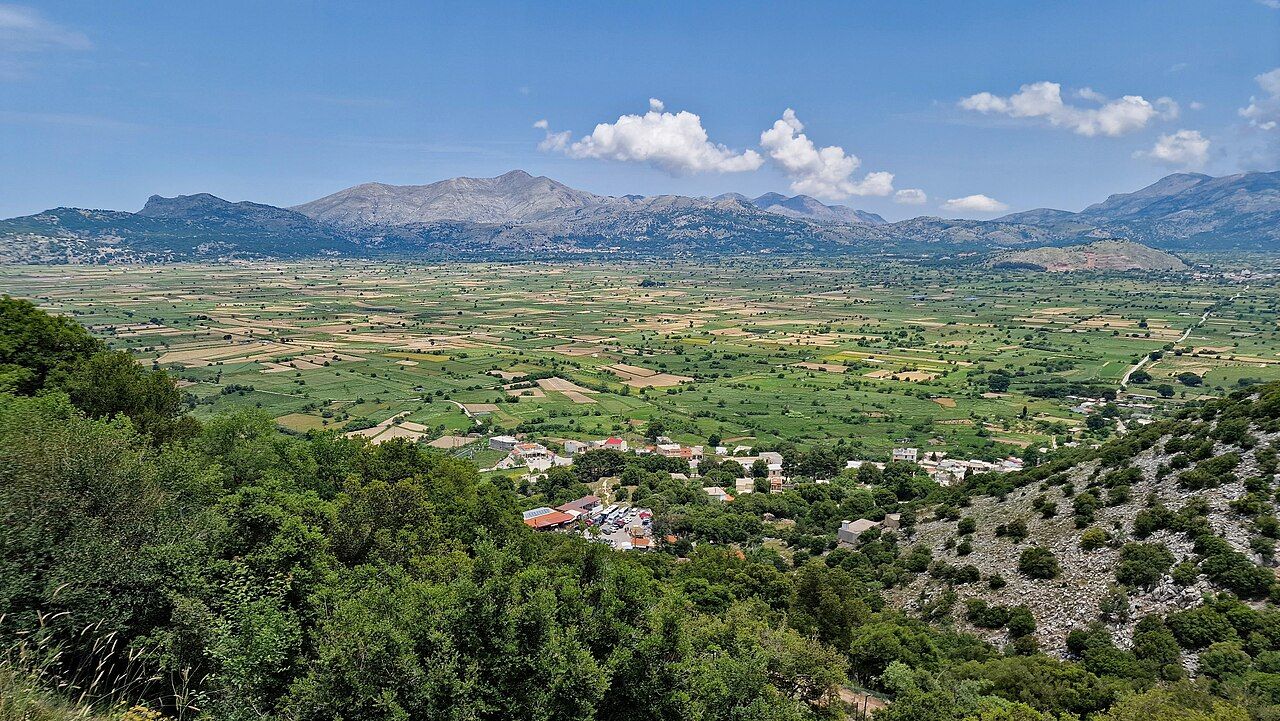
Drive up from the coast on a hot summer day and the change is sudden. The road climbs through terraces and scrub, crests a pass, and below you lies a wide, perfectly flat plain of fields and orchards, closed in on every side by bare mountains. This is the Lasithi Plateau, the Oropedio Lasithiou in Greek, a basin roughly 800 metres above the sea and one of the most distinctive landscapes in Crete.
The air is cooler up here, the light is clearer, and the pace is a farmer's pace. A day trip from Elounda gives you the mountain road, a loop of villages round the edge of the plain and, at Psychro, the cave that legend makes the birthplace of Zeus.
A plain among the mountains
The plateau is a closed basin. Rain and snowmelt drain into it from the surrounding peaks of the Dikti range, and the water sinks away through a swallow hole on the western side, leaving a deep layer of fertile soil. That soil is why people have farmed here since antiquity, growing cereals, potatoes, apples, pears and vegetables in a patchwork of small fields.
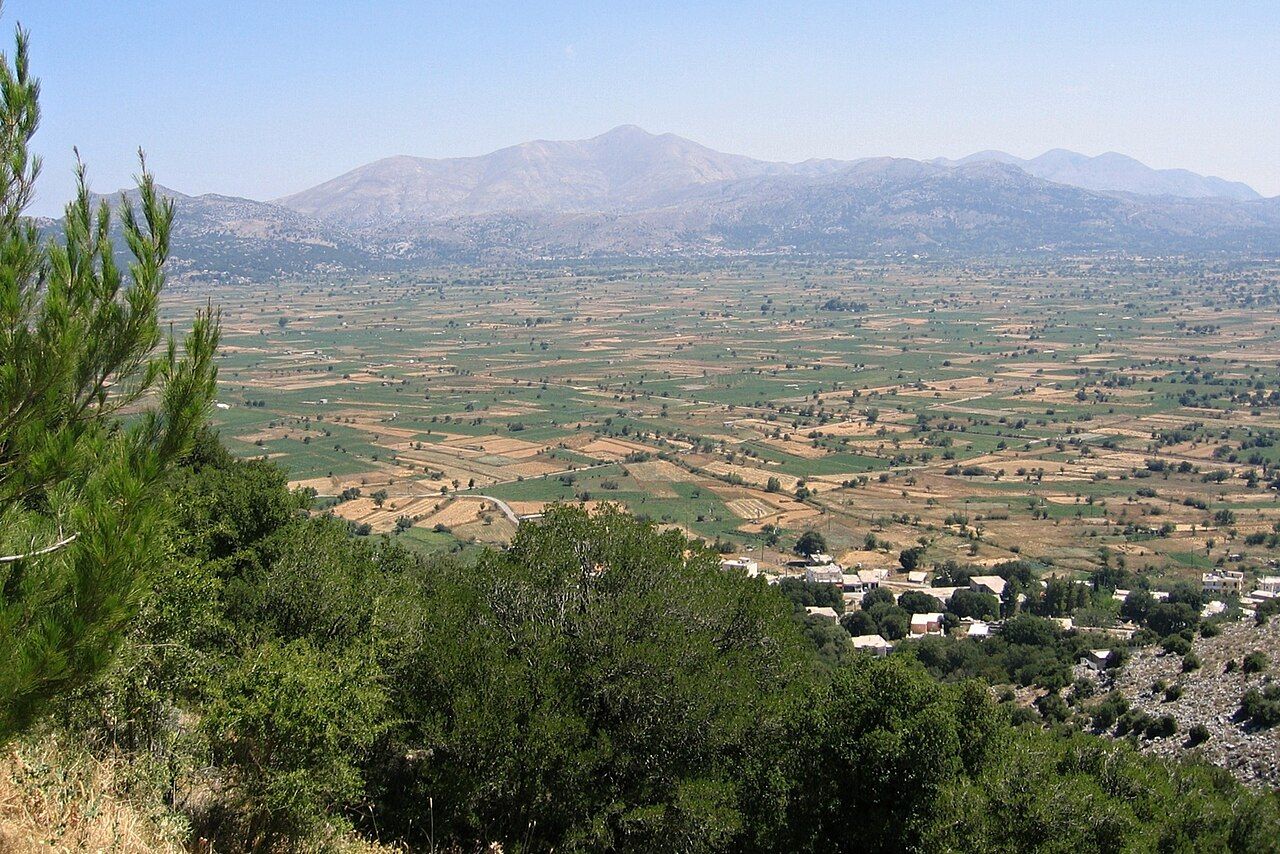

Its history has not been gentle. After revolts against Venetian rule, the Venetians emptied the plateau and banned farming and grazing there for a long period, and only later allowed it to be cultivated again under strict control. In later centuries it was a refuge for rebels against Ottoman rule, and in the Second World War for resistance fighters. The villages that ring the plain, about twenty of them, sit on the lower slopes, so that none of the precious flat ground is wasted on houses.
The windmills, mostly idle now
Old photographs show the plain bristling with thousands of metal windmills with white cloth sails, turning in the breeze to pump water up from shallow wells into small reservoirs for irrigation. They became the emblem of the plateau and appeared on countless postcards.
Most of them stand idle now. Diesel and electric pumps took over their work from the second half of the twentieth century, and many mills have lost their sails or rusted into bare frames. A few have been restored with their white canvas, and you will see the odd one turning, but do not expect a field of moving sails. The skeletons scattered across the fields have their own appeal, a reminder of how the plain was watered for generations.
On the pass at the north-eastern entrance, near Seli Ambelou, there is a different kind of mill: a line of old stone towers that once ground grain, set on the ridge to catch the wind. Several have been rebuilt, and the stop gives you the first full view across the plain.
Villages round the edge
A road loops right round the plateau, linking the villages on its rim. The full circuit is not long, but it is easy to spend a whole day on it with stops. Tzermiado on the northern edge is the largest village and the local centre, with shops, a bank and a church square. Agios Georgios has a small folk museum in a traditional house, showing how families lived and worked here. Psychro, on the south-western side, is the village below the cave.
Between the villages you drive past fields of potatoes and cabbages, apple orchards, low stone walls and small chapels. In spring the plain is bright green and dotted with blossom; in late summer it is dusty and gold. Look out for farm vehicles on narrow lanes, and for sheep and goats being moved along the road.
The Dikteon cave at Psychro
Above the village of Psychro, a steep path leads up the mountainside to the mouth of the Dikteon cave, often called simply the Psychro cave. Legend says that Rhea gave birth to Zeus here and hid him from his father Kronos, who swallowed his children for fear that one would overthrow him. Another cave, on Mount Ida in central Crete, makes the same claim, and the old stories place the god's childhood in both; you can enjoy the tale without needing to settle it.
What is certain is that the cave was a sacred place for a very long time. Excavations found large numbers of offerings from the Minoan period onwards, including bronze figurines, weapons and double axes, many of them pushed into cracks in the rock.
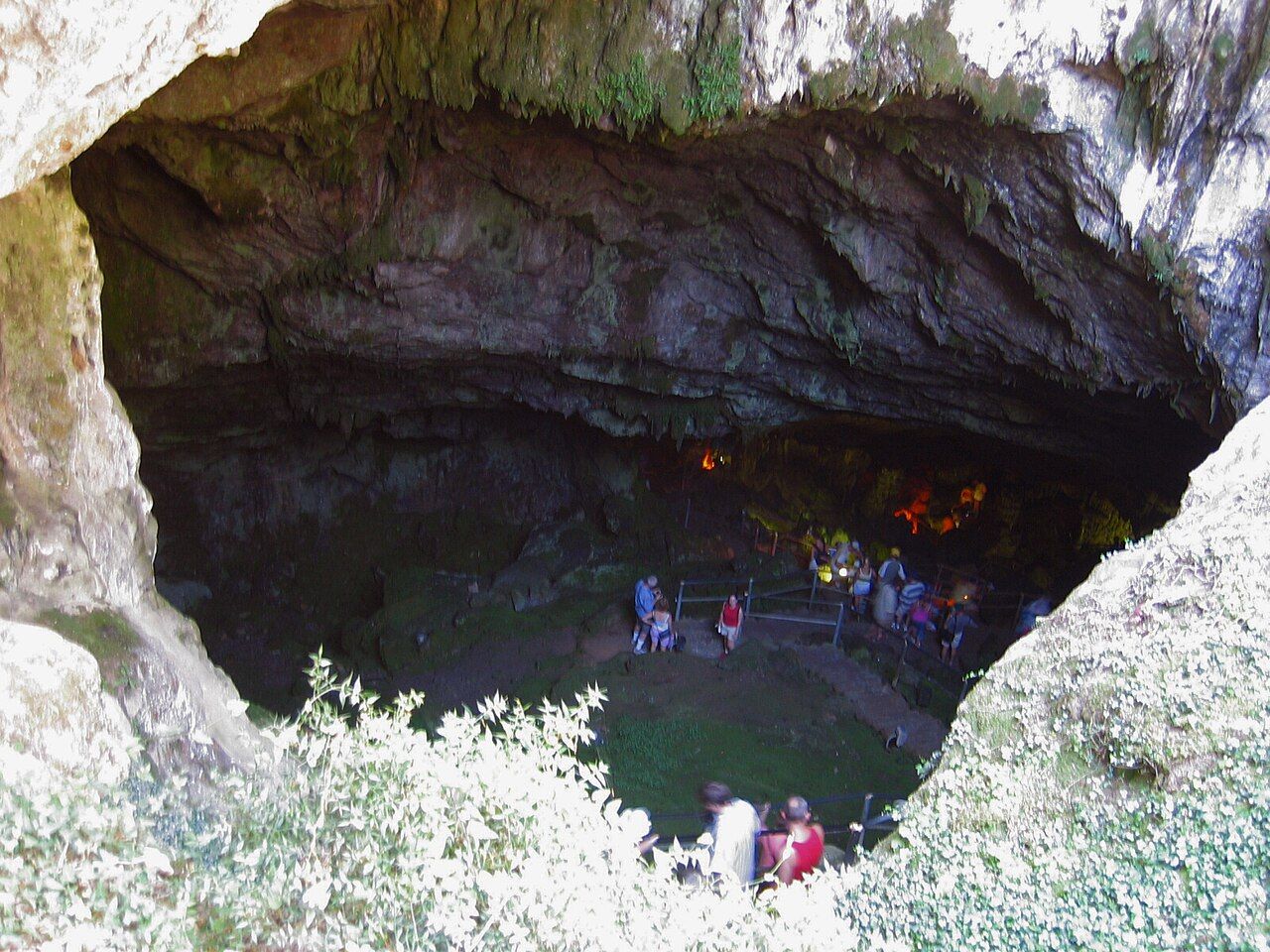

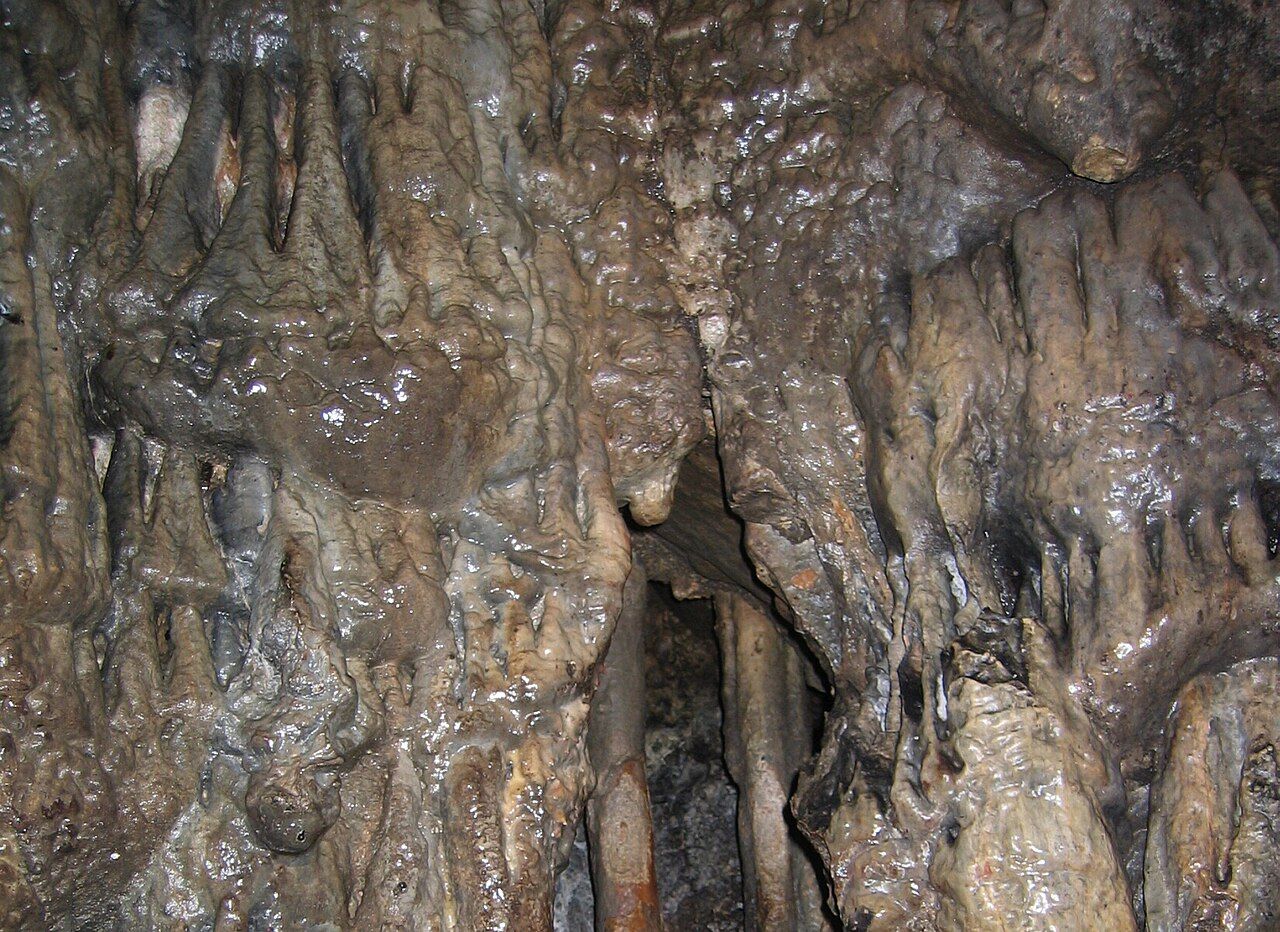
The path from the car park to the entrance is steep, rocky and has little shade; it takes most people around fifteen to twenty minutes at a steady pace. Inside, concrete steps and railings lead down into a large hall full of stalactites and stalagmites, lit by electric lamps. At the bottom is a small pool, and in the lower chamber the formations crowd together like columns.
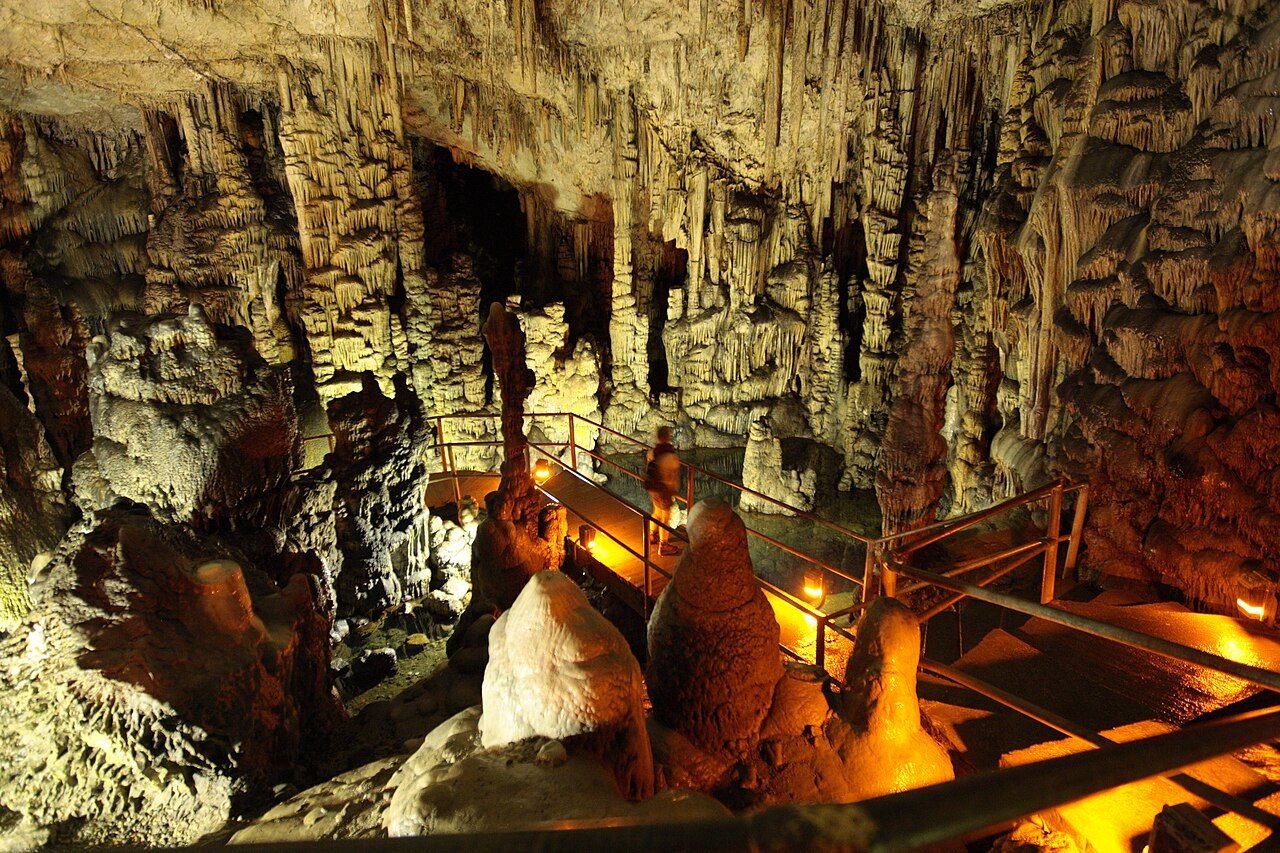

The steps are damp and can be slippery, and the cave is noticeably cool even in August. Shoes with grip and a light layer make the visit far more comfortable. In the past, donkeys were offered for the climb from the car park; arrangements like that come and go. The cave has an entry charge and set opening hours that change with the season, and it can be busy at midday, so early or late is better.

The road up
From Elounda there are two main approaches. One goes west along the national road and turns inland near Neapoli, then climbs through villages to the eastern pass. The other continues along the coast towards Malia and turns south at the junction for the plateau, climbing through Potamies, Krasi and Kera to the northern pass. Both are winding mountain roads with steep bends and fine views; allow about an hour and a half each way without stops, and more if you take your time. A good loop is up one way and down the other.
Driving on these roads needs care. Keep to your side on blind bends, sound the horn where the road is very tight, and expect slow tractors and animals. Fill up with fuel before you climb, since stations on the plateau are few. Organised day trips run from the coast in summer, and there are infrequent buses from Heraklion and Agios Nikolaos.
The plateau is cooler than the coast, and in spring and autumn the evenings can be cold, so take a warm layer. In winter snow can close the roads for a while. In summer the shade comes from village plane trees and orchards rather than the open fields, so plan your walks for morning or late afternoon and carry water.
Combine the trip with other inland sights if you like. On the way back down towards Agios Nikolaos, the painted church and village described in the guide to Kritsa and Panagia Kera are not far off the route. For a longer walk in green country, the guide to the Richtis gorge covers a very different kind of mountain landscape on the other side of the bay, and the guide to olive groves and wild herbs explains much of what you smell on the drive up.
Legend says that Rhea gave birth to Zeus here and hid him from his father Kronos, who swallowed his children for fear that one would overthrow him.
Lent to this page by
Photographs: Marc Ryckaert ( MJJR ) / CC-BY-3.0; Rigorius / CC-BY-SA-4.0; Kostdro / CC-BY-SA-3.0; Dietmar Rabich / CC-BY-SA-4.0


