
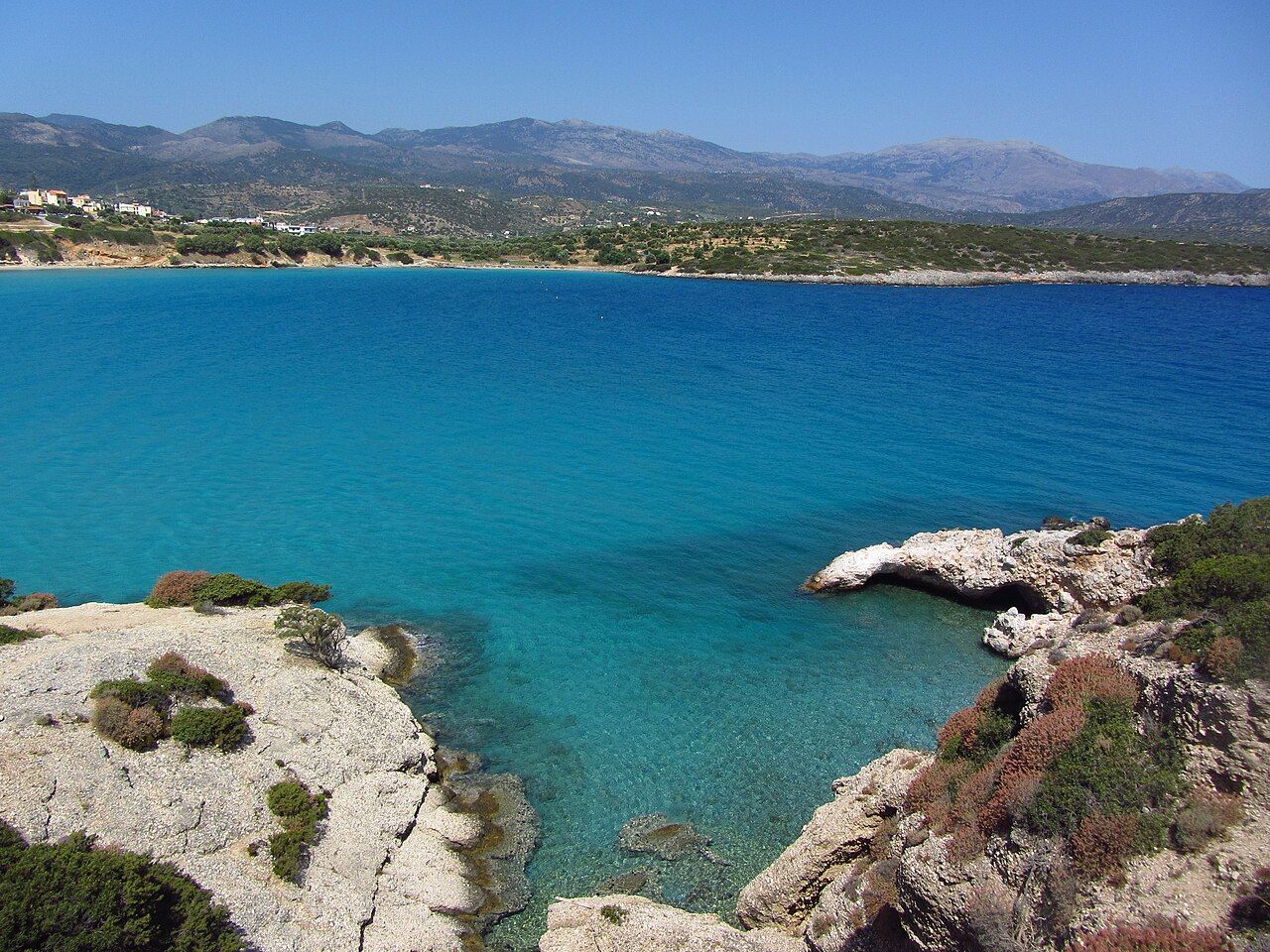
Elounda is not famous for long beaches. What it has is a sheltered gulf of clear, calm water, protected from the open sea by the Kolokytha peninsula, and a string of small beaches and rocky swimming spots within easy reach. Add the pebble shore at Plaka to the north and the sandy bays around Istro to the south, and you have enough for a different swim every day of a week.
This guide takes them in turn, then covers the wind, shade, sea urchins and the best time of day to go.
Elounda town beach
The village's main beach runs along the shore just north of the harbour, a strip of sand and fine shingle with shallow water that deepens gently. It is the easiest swim in the area: you can walk there from the centre, and in summer there are sunbeds and umbrellas to rent, showers and places to eat and drink close by. The water is usually calm, and it suits children and anyone who wants an unhurried swim.
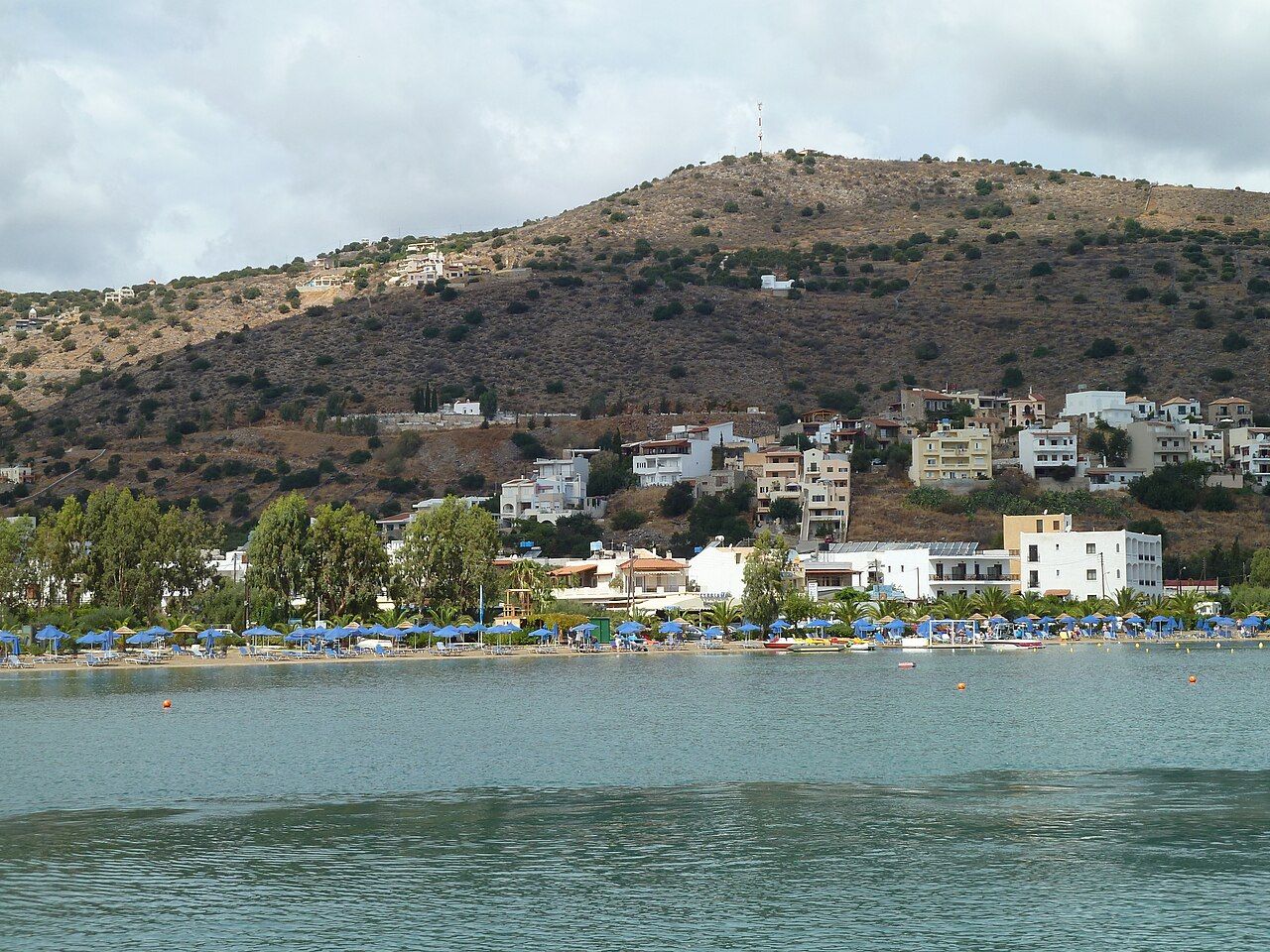

The downside is that it gets busy in July and August, and there is little natural shade beyond a few trees at the back. Go in the morning, or in the early evening when the sun drops behind the hills and the light turns soft. The guide to Elounda, the harbour village covers the rest of the waterfront.
Kolokytha and the causeway
South of the village, a causeway crosses to the Kolokytha peninsula near the old salt pans and the remains of ancient Olous. Along the causeway there are small sandy and stony spots where people swim on calm days, and the shallow water near the canal is a favourite with snorkellers looking for the outlines of sunken walls.
Across the peninsula, a walk of roughly half an hour on a dirt track leads to Kolokytha bay, a deep cove of very clear turquoise water with a small beach of sand and pebbles. Boats from the harbour often call there in summer, so it is rarely empty at midday, but early or late it can be quiet. There are usually no facilities and very little shade, so take water, food and something to shelter under. The guide to walking the Kolokytha peninsula has the route.
Plaka's pebbles
A few kilometres north of Elounda, the small village of Plaka faces the island of Spinalonga across a narrow strait. Its beach is made of smooth grey and white pebbles, and the water is deep, cool and exceptionally clear. Swimming here, with the walls of the fortress across the water, is one of the great simple pleasures of the area.
The pebbles are hard on bare feet, and the bottom shelves quickly, so it suits confident swimmers better than small children. In summer there are some sunbeds and umbrellas for hire; otherwise there is not much shade. The guide to Plaka and the strait has more on the village.
Voulisma and the Istro coast
South-east of Agios Nikolaos, along the coast road towards Sitia and Ierapetra, the village of Istro has several bays, the best known being Voulisma. It is a curve of golden sand backed by low hills, with turquoise water that stays shallow for some distance. It is one of the most popular beaches in the east of the island, and in high summer it fills up by late morning.
Voulisma usually has sunbeds and umbrellas for rent in season and a few places to eat nearby, but parking along the road can be tight. Around it, smaller coves and rocky points give quieter swimming, and the coastline north and south of Istro has more bays to explore.
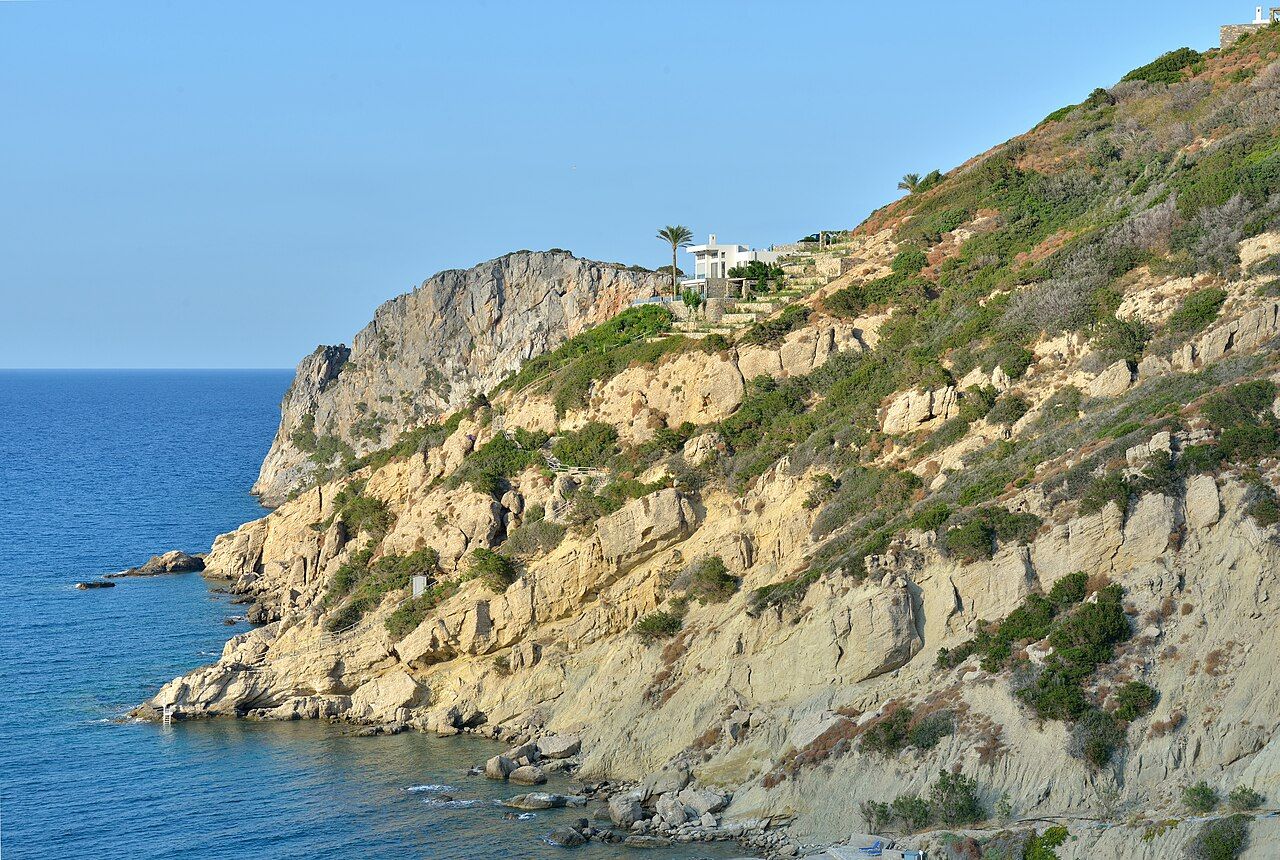

From Elounda the drive takes roughly half an hour, depending on traffic through Agios Nikolaos. Buses along the coast road stop near Istro, and timetables change with the season.
Calm days and windy days
The north-east of Crete is shaped by the wind. In July and August the meltemi, a dry wind from the north, can blow for several days at a time, chopping up the sea on exposed coasts and sending sand across beaches. The gulf of Elounda is sheltered by the peninsula and usually stays calmer than the open north coast, which is one reason the area is popular with families.
On a windy day:
- Choose beaches on the sheltered side of a headland or inside the gulf.
- Watch for flags where lifeguards are present, and respect a red flag.
- Be careful with inflatables, which can be blown offshore very quickly.
- Keep children close; waves on a usually calm beach can surprise them.
On calm mornings, by contrast, the water inside the gulf can be as smooth as a lake, and early swims are the best of the day.
Shade, sea urchins and early swims
Few beaches here have natural shade. Where there are rented umbrellas, use them; elsewhere bring your own shade, a wide hat, a long-sleeved top and plenty of water. In high summer the hours from late morning to mid-afternoon are hot enough to make the sand painful and the sun harmful. Swim early, rest in the middle of the day and come back in the late afternoon.
Rocky shores and the edges of pebble beaches often have sea urchins, round black spiny animals that sit on rocks in shallow water. A sea-urchin spine in the foot can spoil several days of swimming. Wear water shoes when entering from rocks, look before you put your hand down, and if you do tread on one, get the spines out carefully and keep the wound clean.
- Bring a mask and snorkel; the water is clear almost everywhere.
- Take your rubbish away, especially from beaches without bins.
- Do not leave valuables unattended on the sand or in a parked car.
- Check whether a lifeguard is on duty; many small beaches have none.
For days when you want the sea from a different angle, the guide to Spinalonga covers the boats that cross the gulf to the island.
Lent to this page by
Photographs: Doris Antony, Berlin / CC-BY-SA-3.0; Florian Waßmann / CC-BY-3.0; Mietek Ł / CC-BY-SA-3.0; Vadim Indeikin / CC-BY-SA-3.0; Ggia / CC-BY-SA-3.0


