
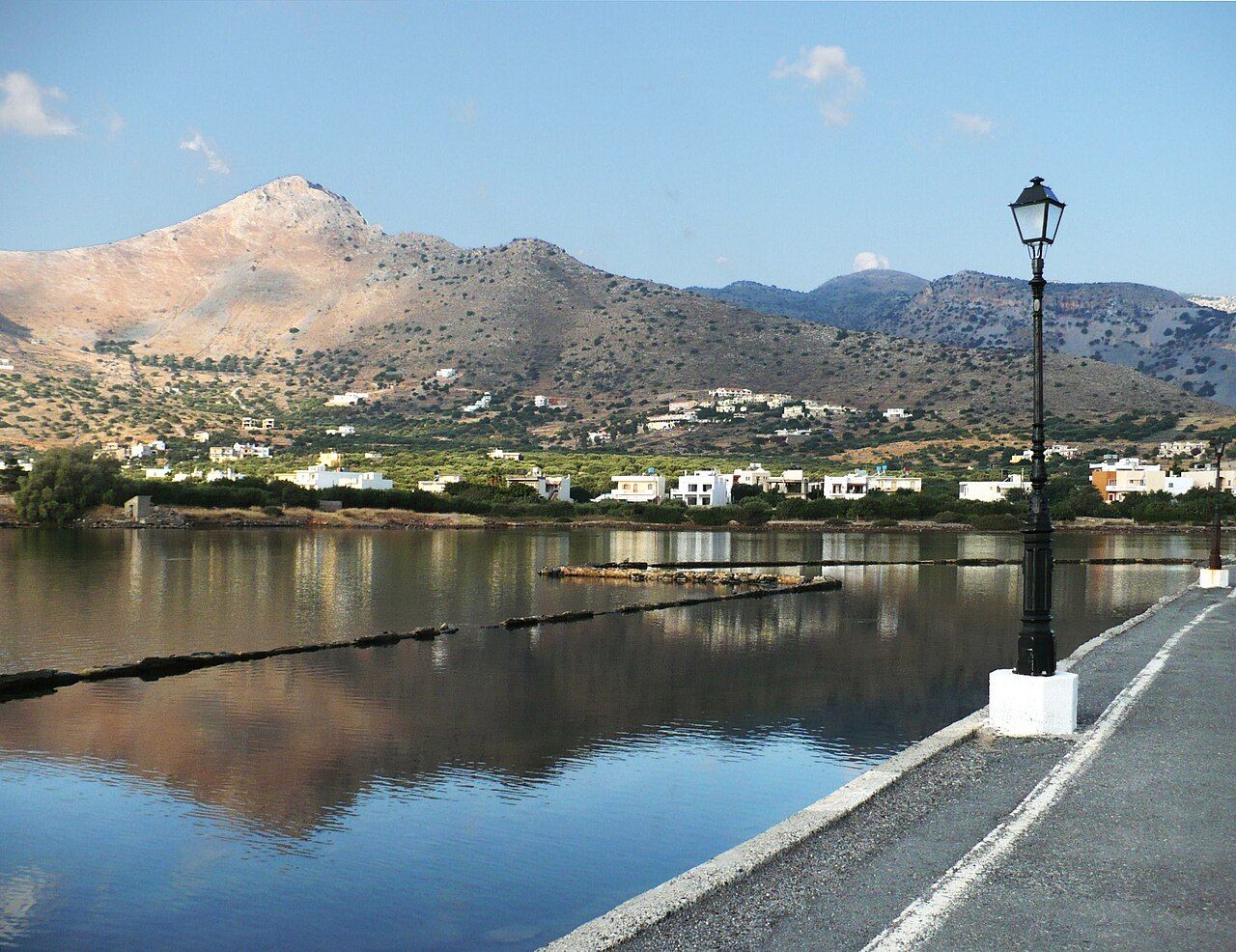
South of Elounda harbour the shore flattens out into low, marshy ground. Here a narrow causeway runs across to the rocky Spinalonga peninsula, which locals often call Kolokytha. On one side of it lie the old salt pans, on the other the sea. And in the shallows close by, under a metre or two of water, lie the remains of Olous, an ancient city that has gradually sunk into the bay.
A city under the water
Olous was a Greek city of some importance in the classical and Hellenistic periods. It had a harbour, temples and its own coins, and it made treaties with other Cretan cities, including Lato in the hills inland. The site lay on the isthmus that once joined the peninsula to the mainland, a natural place for a harbour town with sheltered water on both sides.
Over the centuries the land here sank, a slow process caused by movements of the earth along this part of Crete's coast. Parts of the old city ended up below sea level. What remains today are lines of walls and foundations in the shallow water near the causeway, visible on a calm day from the shore or, much better, from the surface with a mask.
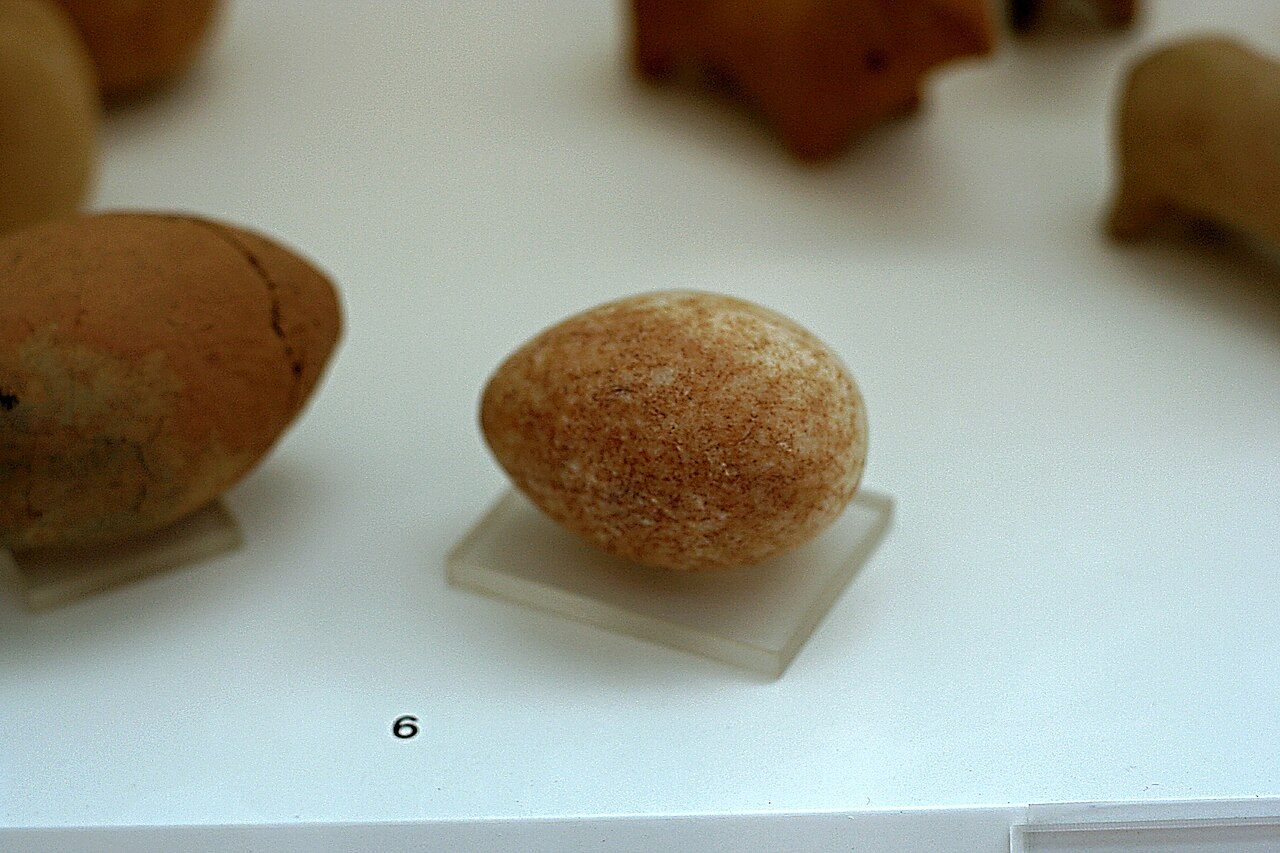

Finds from Olous, including small votive objects, are kept in the Archaeological Museum at Agios Nikolaos. They make a good companion to a swim over the ruins. Our guide to Agios Nikolaos covers the museum and the town.
The causeway and the canal
The causeway today carries a narrow road across to the peninsula. Where it meets the far side, a short canal cuts through the isthmus. It was dug in 1897 by French troops, part of the international force present on Crete in those years, to let small boats pass between the inner bay and the open water without going round the peninsula.
A small bridge crosses the canal, and it is a good spot to stand and watch the water move through on a windy day. The peninsula on the other side became an island in a technical sense once the canal was dug, though nobody really thinks of it that way.
Walking out
From Elounda harbour, the walk to the causeway takes about twenty minutes along the shore road. The route is flat and easy, but almost completely exposed. Go early or late in summer and carry water.
Salt pans and windmills
The shallow basins on the inner side of the causeway are old salt pans. Salt was harvested here from Venetian times until well into the twentieth century, and it was one of the reasons the Venetians fortified Spinalonga to guard the bay. Seawater was let into the shallow basins and left to evaporate in the summer sun, leaving a crust of salt to be raked up.
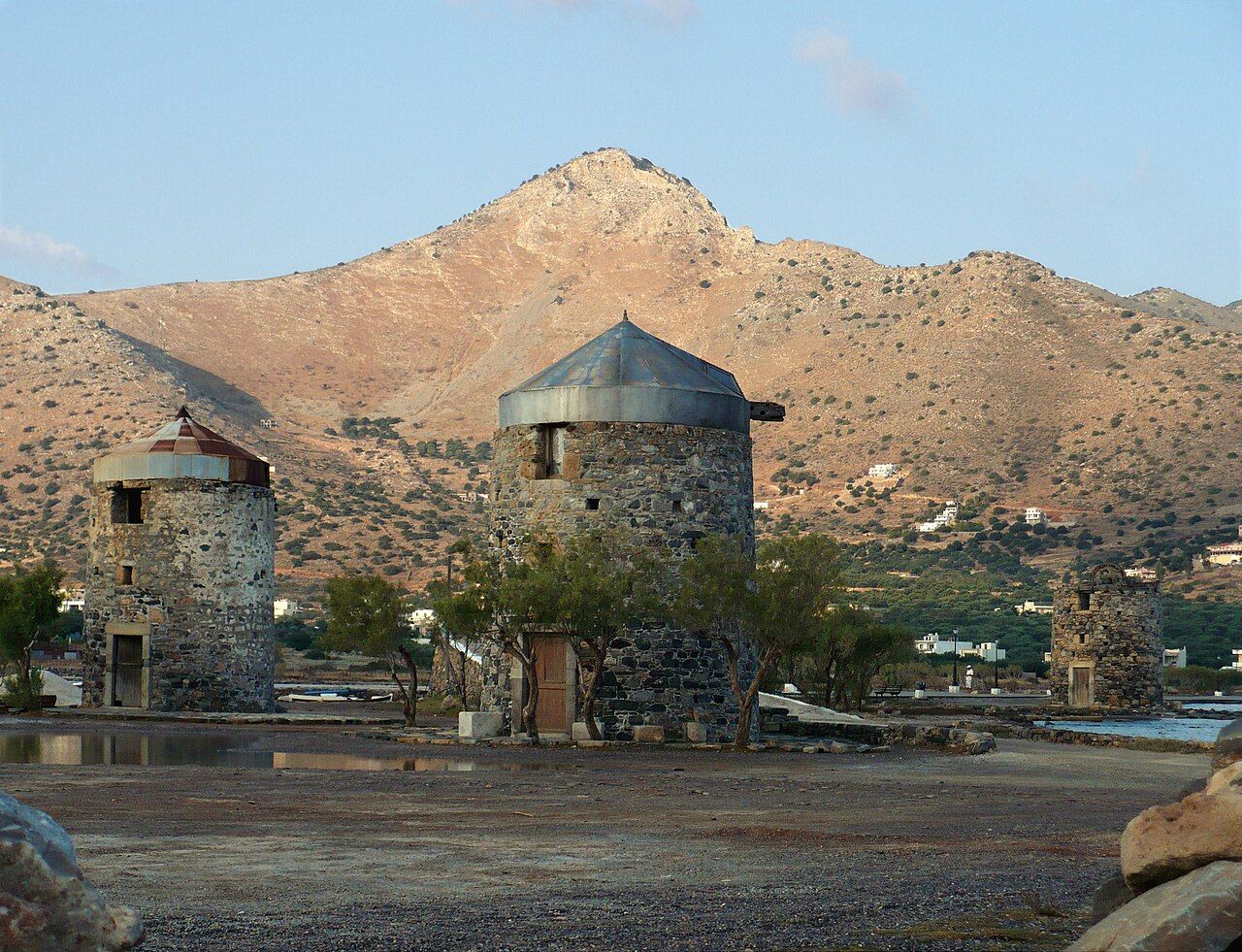
Along the edge of the pans stand several old stone windmills, their sails long gone. Some have been given new roofs, others are open shells. They were once part of the working landscape here, and they make a fine sight in the evening when the low sun lights the stone and the hills behind turn rose.

The salt pans are no longer worked, and the shallow water now draws wading birds at certain times of year, particularly in spring and autumn. Keep to the paths and the causeway, as the edges of the pans are soft and the habitat is fragile.
The basilica mosaic
Just across the canal, on the peninsula side, are the remains of an early Christian basilica. Its floor mosaic survives in part, with geometric patterns and fish worked in coloured stone. The site is small and simply fenced, and it is easy to miss if you walk past without looking.
The mosaic belongs to a later period than the drowned city, when Christian communities built churches across Crete. Nearby stands the small church of Agia Fotini, and from here paths lead on into the peninsula. If you want to keep walking, our guide to the Kolokytha peninsula describes the route to the bay on the far side.
Access to the mosaic can vary. At times it is open to view, at others it is covered for protection.
Snorkelling over the ruins
The best way to see Olous is from the surface of the water. On a calm morning, with the sun behind you, a mask and snorkel show the outlines of walls and the shapes of foundations on the sandy bottom. Nothing here is dramatic, and some imagination is needed. But floating over the streets of a city that once traded across the Aegean is a rare experience.
- Choose a calm day. Wind stirs up the bottom and makes the ruins hard to see.
- Enter from the shore near the causeway, where the water is shallow.
- Look but do not touch or take anything. The remains are a protected archaeological site.
- Wear water shoes, as the bottom has rocks and urchins in places.
- Watch for small boats coming through the canal.
The water here is usually warm enough for comfortable snorkelling from June to October. In high summer, go early: there is little or no shade near the causeway, and the midday sun on shallow water is fierce.
A morning at the causeway
A simple plan works well. Walk from Elounda in the early morning, swim and snorkel over Olous while the water is still and clear, look at the basilica mosaic and the windmills, and be back in the village before the heat sets in. If you are fit and the day is cool, carry on over the peninsula to Kolokytha bay.
The evening is the other good time. The windmills and the salt pans are at their best in low light, and the walk back to the harbour as the sun goes down is one of the pleasures of staying in Elounda. Our guide to beaches around Elounda lists more spots for a swim nearby.
Lent to this page by
Photographs: Ggia / CC-BY-SA-3.0; Vadim Indeikin / CC-BY-SA-3.0; Tomisti / CC-BY-SA-4.0; Tomisti / CC-BY-SA-4.0; Doris Antony, Berlin / CC-BY-SA-3.0


